
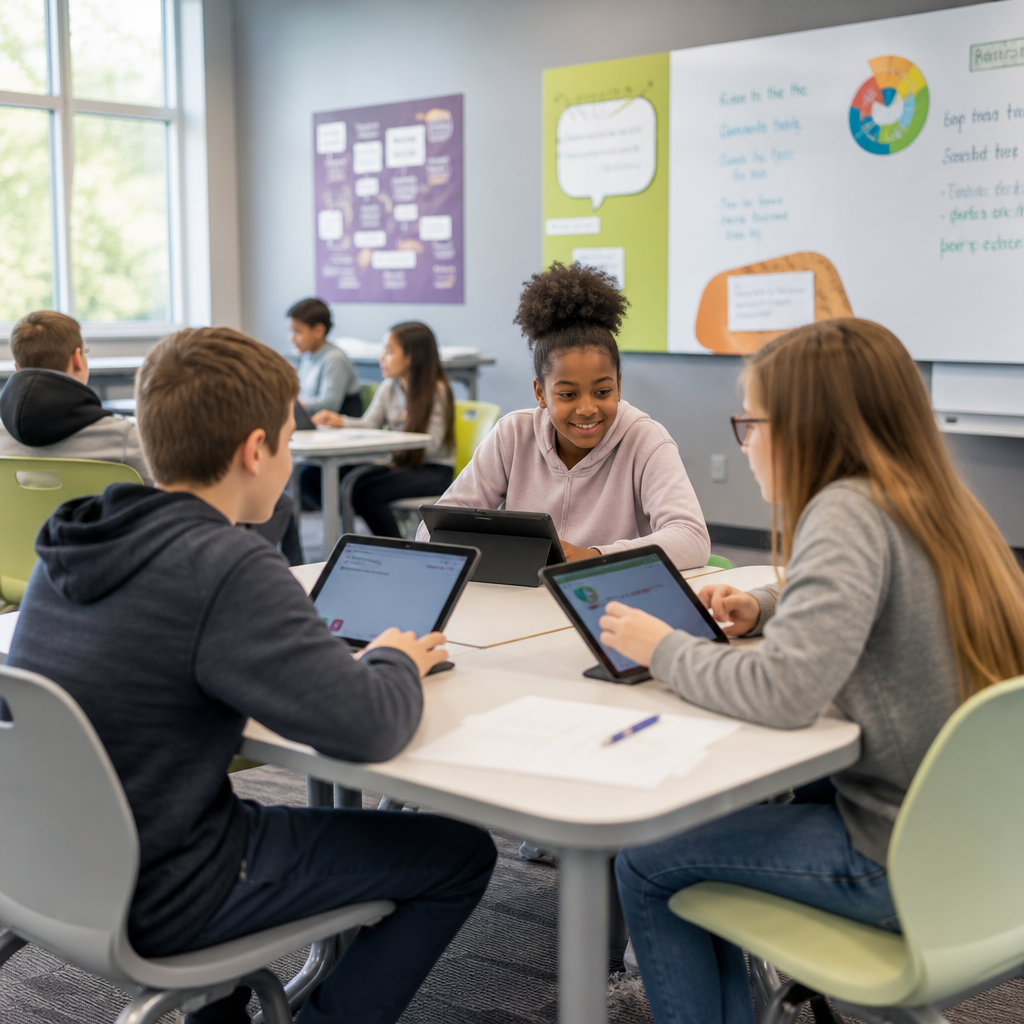
Empowering Students Through Collaborative Learning in the Modern Classroom
Understanding the Role of Collaborative Learning in Modern Classrooms
In the evolving landscape of contemporary education, the traditional model of the solitary student working at a desk is being fundamentally redefined. Collaborative learning, once considered an optional pedagogical strategy, has become a cornerstone of effective teaching. It shifts the focus from passive information absorption to active engagement, where students learn not only from their teachers but, more importantly, from their peers. This pedagogical shift addresses the growing need for skills that transcend rote memorization—such as critical thinking, communication, and emotional intelligence—which are increasingly vital in the 21st-century workforce.
Collaborative learning is rooted in the belief that knowledge is a social construct. When students discuss, debate, and problem-solve together, they are required to articulate their thoughts, listen to diverse perspectives, and negotiate meaning. This process helps solidify their own understanding of the subject matter while developing the interpersonal skills necessary for success in any professional environment. By fostering an environment where cooperation is prioritized over competition, educators can create a more inclusive, productive, and dynamic classroom atmosphere.
The Cognitive Benefits of Peer Interaction
From a cognitive perspective, collaborative learning offers significant advantages. When a student explains a concept to a classmate, they must internalize and restructure that information in a way that is clear and logical. This is often referred to as the “protégé effect,” where teaching someone else significantly improves the teacher’s own grasp of the material. Furthermore, students who struggle with a particular topic may feel more comfortable asking a peer for clarification than approaching a teacher, reducing anxiety and promoting a growth mindset.
Working in small groups also allows students to encounter cognitive conflict. When two students have different approaches to a problem, they must examine each other’s reasoning, identify flaws, and find a common solution. This intellectual friction is a powerful catalyst for deeper learning. Instead of simply accepting the information provided in a textbook, students become active participants in the knowledge-creation process, which leads to better retention and the ability to apply concepts in new, unfamiliar contexts.
Cultivating Essential Soft Skills
Beyond academic performance, the primary value of collaborative learning lies in the development of soft skills. In a group project, students are forced to navigate the complexities of human interaction. They learn to delegate tasks based on individual strengths, manage their time effectively, handle disagreements constructively, and hold themselves accountable to their peers. These are not merely school-related tasks; they are life skills that prepare students for the demands of adulthood.
Teachers often observe that shy or less confident students find their voice through structured group work. When the pressure of performing in front of the entire class is removed and replaced by the intimacy of a smaller group, students are often more willing to take intellectual risks. This supportive environment helps students build confidence in their own ideas and fosters a sense of belonging, which is crucial for overall student wellbeing and engagement.
Strategies for Effective Group Facilitation
While the benefits are clear, implementing collaborative learning requires intentional planning and structure. It is not enough to simply divide students into groups and provide an assignment. Effective facilitation involves careful grouping strategies, clear expectations, and ongoing support. Teachers must play an active role as observers and facilitators, circulating through the room to ensure that all students are contributing equitably and that the discussions remain focused on learning objectives.
Balancing Group Composition
One of the most debated topics in collaborative learning is how to form groups. Should students choose their own partners, or should teachers assign them? Research suggests that heterogeneous groups—those consisting of students with diverse academic backgrounds, interests, and social dynamics—tend to produce the most robust outcomes. Mixing students of different ability levels can foster peer tutoring, provided that the group structure encourages every participant to contribute.
Defining Roles and Responsibilities
To prevent the common problem of “social loafing,” where one or two students do all the work, it is helpful to assign specific roles within the group. Roles such as the facilitator, the scribe, the timekeeper, or the skeptic can ensure that everyone has a clear purpose. These roles rotate frequently, allowing every student to develop a diverse set of project management skills. Clear rubrics that assess both individual contributions and group output are also essential to maintain accountability.
Overcoming Challenges in the Collaborative Classroom
Despite its many advantages, collaborative learning is not without its challenges. Some students may find it difficult to transition away from traditional individualistic study methods. Others may feel frustrated by group members who do not contribute as expected. Managing these dynamics requires a high level of emotional intelligence from the educator. It is vital to teach students how to provide feedback, how to express disagreement respectfully, and how to resolve interpersonal conflicts before they escalate.
Furthermore, technology can play a significant role in facilitating collaboration, but it must be used thoughtfully. Digital collaborative platforms allow students to work on shared documents in real-time, share resources, and communicate outside of school hours. However, technology should never replace the face-to-face interaction that is the heart of true collaborative learning. Digital tools should be seen as extensions of the social process, providing efficiency and organization rather than serving as the primary source of engagement.
Designing Space for Collaboration
The physical environment of the classroom is another factor that cannot be ignored. A room filled with rows of desks bolted to the floor is inherently antithetical to collaborative work. Modern school management teams are increasingly investing in flexible furniture that can be quickly rearranged to accommodate small groups, larger discussion circles, or individual study. Creating nooks for quiet reflection alongside larger tables for collaborative tasks ensures that students have the right tools for the specific type of learning they are undertaking at any given time.
When students have the agency to change their physical surroundings, they feel a greater sense of ownership over their learning environment. This sense of agency is a key driver of engagement. A classroom that can transform from a lecture-style theater to a laboratory of collaborative exploration in a matter of minutes sends a powerful message to students that their learning process is dynamic, flexible, and entirely their own.
The Future of Collaborative Pedagogy
As we look toward the future, the integration of collaborative learning will continue to deepen. With the rise of project-based learning and interdisciplinary studies, the silos between subjects are beginning to break down. Students will increasingly be asked to solve real-world, complex problems that require a synthesis of knowledge from various fields. These problems are too large for any single individual to solve alone; they require the diverse expertise and collective intelligence of a well-functioning team.
The role of the teacher is also shifting from the “sage on the stage” to the “guide on the side.” In this new model, the teacher acts as a designer of learning experiences, carefully crafting environments where students are encouraged to explore, fail, refine, and succeed together. This transition is challenging but profoundly rewarding. It demands patience, a willingness to relinquish some control, and a commitment to nurturing the social-emotional growth of every student.
In conclusion, collaborative learning is much more than a classroom trend. It is a vital strategy for equipping students with the tools they need to navigate a rapidly changing world. By fostering connection, communication, and critical inquiry, we are not just teaching students facts; we are teaching them how to be active, empathetic, and intelligent participants in their local and global communities. Investing in collaborative processes today is an investment in a more cohesive, creative, and capable generation tomorrow.
0 Comments