
Beyond Four Walls: How Classroom Design Shapes the Learning Journey
The Evolution of Modern Classroom Design and Its Impact on Learning
The physical environment of a classroom is far more than just a container for learning. For decades, traditional school design prioritized uniformity, rows of desks, and a teacher-centered approach that reflected the industrial age’s need for standardized output. However, as our understanding of pedagogy, cognitive science, and student engagement has evolved, so too must the architecture and layout of the spaces where students spend the majority of their day. Today, progressive educators and school administrators recognize that classroom design is a silent, yet powerful, pedagogical tool that can either stifle or ignite curiosity.
Modern learning environments are shifting away from the rigid “sage on the stage” model toward more fluid, collaborative, and student-centered spaces. This transformation is not merely about aesthetics or colorful walls; it is fundamentally about creating environments that support diverse learning styles, foster social-emotional development, and leverage technology to enhance the educational experience. When we rethink the classroom, we are essentially rethinking the very nature of how students interact with information, each other, and their instructors.
Beyond the Desk: Creating Flexible Learning Zones
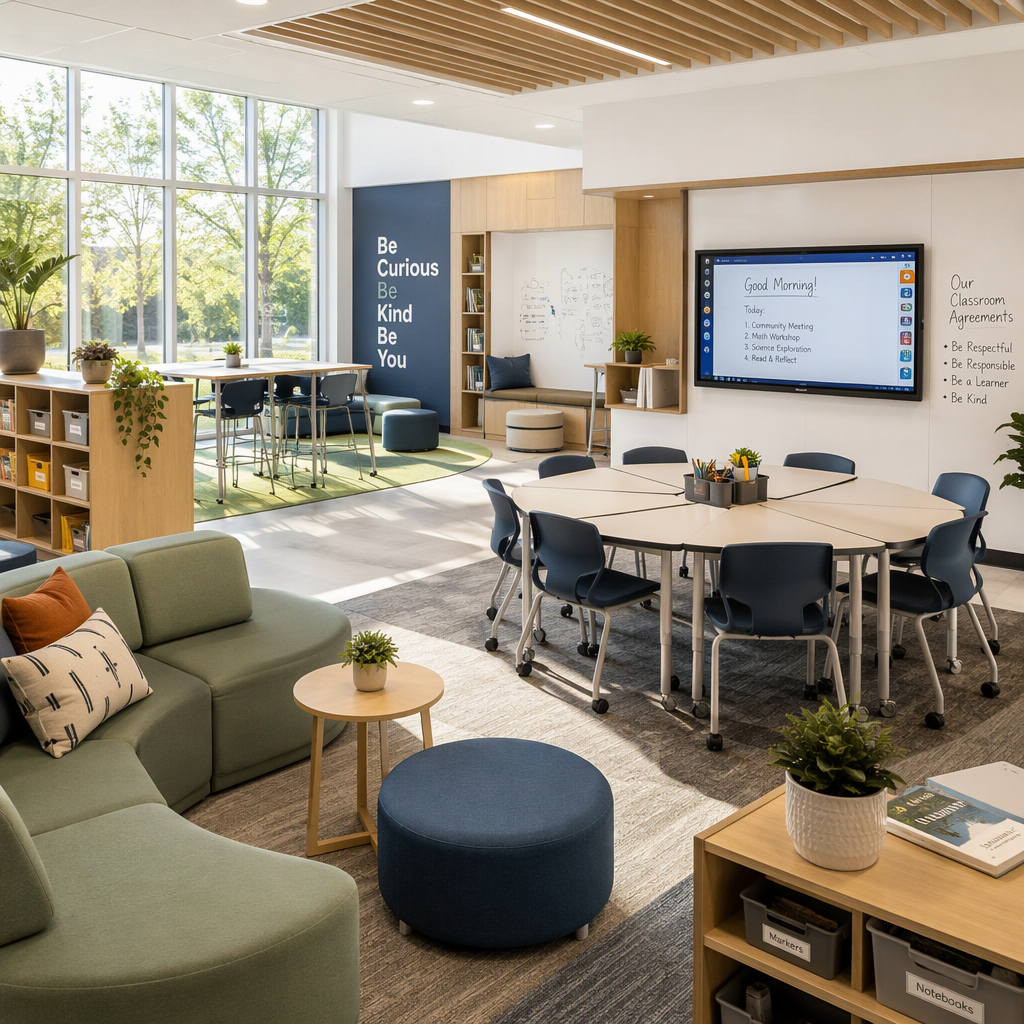
The most significant shift in contemporary classroom design is the move toward flexibility. Fixed, bolted-down furniture is rapidly becoming a relic of the past, replaced by modular desks and chairs that can be rearranged in minutes to support different activities. A classroom might begin the day in a lecture setup, transition into small breakout clusters for group projects by mid-morning, and shift into a semi-circle for a class discussion in the afternoon.
This flexibility encourages what is often called “active learning.” When students have the agency to move and rearrange their space, they become active participants in their environment rather than passive observers. Furthermore, creating specific “zones” within a single classroom—such as a quiet reading nook, a tech-heavy collaborative hub, and an area for creative prototyping—allows for differentiated instruction. Teachers can work with small groups in one area while other students engage in independent or collaborative work elsewhere, acknowledging that no two students learn exactly the same way or at the same pace.
The Role of Natural Light and Biophilic Design
Scientific research consistently demonstrates the profound impact of the physical environment on student health and cognitive performance. One of the most critical elements in this equation is natural light. Classrooms that rely heavily on artificial, flickering fluorescent lighting can often lead to increased fatigue and decreased focus. Conversely, abundant natural light has been linked to improved student attendance, better mood, and significantly higher performance on standardized tests.
Beyond light, the concept of biophilic design—bringing elements of the natural world into the built environment—is gaining traction in school architecture. This does not always mean massive renovations. Simply incorporating indoor plants, using natural materials like wood or stone for furniture, and choosing color palettes that mimic nature can reduce stress levels for both students and teachers. These subtle cues help ground students, making the school feel less like a clinical institution and more like a vibrant, welcoming space that supports their overall well-being.
Technology as a Seamless Integration
In the past, technology in the classroom often meant a stationary desktop computer in the corner or a single, cumbersome projector at the front of the room. Today, technology is pervasive and must be integrated seamlessly into the design of the learning space. This means ensuring that power outlets are accessible throughout the room to support student-owned devices, creating dedicated areas for charging and storage, and utilizing interactive displays that facilitate collaboration rather than just presentation.
However, successful classroom design avoids the mistake of prioritizing technology over human interaction. The best designs use technology to amplify collaboration. For instance, screens that allow students to project their work from their own laptops to a central hub encourage peer-to-peer critique and shared problem-solving. By embedding technology into the fabric of the classroom, schools can move beyond passive consumption of digital media toward active creation and digital literacy.
The Importance of Acoustic Comfort
Often overlooked, the acoustic environment of a classroom is perhaps one of the most critical factors in academic success. High noise levels, echoes, and poor sound distribution are significant barriers to learning, especially for younger children or those with auditory processing challenges. A space that is too noisy can increase stress, hinder concentration, and make it difficult for teachers to maintain control without raising their voices.
Modern school renovations are increasingly incorporating sound-absorbing materials—such as acoustic ceiling tiles, carpeted areas, and soft furnishings—to create a balanced soundscape. When a student can hear their teacher clearly from anywhere in the room, and when small groups can work together without overwhelming the rest of the class, the overall educational experience improves dramatically. Acoustic comfort is not just about silence; it is about creating a space where effective communication can thrive.
Supporting Social-Emotional Learning Through Space
Schools are increasingly recognizing their role in developing the “whole child,” a mission that extends to supporting social-emotional learning (SEL). The physical environment plays a crucial role here as well. Providing students with spaces where they can decompress, practice self-regulation, or engage in meaningful peer interaction is essential for healthy development. This could manifest as a designated “cool-down” corner with comfortable seating, a collaborative maker-space where mistakes are viewed as part of the creative process, or wide, inviting corridors that encourage social bonding during transition periods.
By creating a space that feels safe and supportive, schools can reduce anxiety and build a stronger sense of community. When students feel that their environment is designed with their emotional needs in mind, they are more likely to feel a sense of belonging, which is a powerful predictor of academic persistence and long-term success.
The Teacher’s Perspective: Designing for Pedagogy
Finally, we must consider the needs of the teacher. A classroom design that is cumbersome to manage or fails to provide the instructor with visibility and ease of movement will eventually be abandoned. Teachers need spaces that allow them to facilitate learning effectively. This includes ample storage for resources, the ability to quickly reconfigure layouts, and a dedicated workspace that allows for both administrative tasks and student consultations.
When administrators involve teachers in the design process, they gain invaluable insights into the daily realities of the classroom. Teachers understand the traffic flow, the specific equipment needs, and the environmental factors that can make or break a lesson. By fostering a collaborative design process, schools can ensure that the final product is not just a beautiful space, but a functional, pedagogically-driven environment that empowers educators to do their best work.
Conclusion: The Future of Educational Spaces
The architecture of learning is constantly changing, driven by our deepening understanding of human psychology and pedagogy. Moving forward, the most successful schools will be those that view their physical facilities as flexible, evolving assets. Whether it is a full-scale redesign of a school building or a strategic update to a single classroom, the goal remains the same: to create an environment that invites curiosity, sustains focus, and nurtures the potential of every student. By prioritizing flexibility, natural light, acoustic health, and the integration of technology, we can build the classrooms of the future—spaces where students feel inspired to explore, collaborate, and reach their full academic potential.
0 Comments