
Cultivating Collaboration: The Evolution of Modern Classrooms
The Future of Collaborative Learning in Modern Classrooms
The traditional model of education, long centered on the image of a teacher standing at the front of a room delivering information to rows of silent, attentive students, is rapidly evolving. Today, the focus has shifted toward collaborative learning environments where active participation, peer-to-peer interaction, and shared problem-solving take center stage. As we navigate an increasingly interconnected world, the ability to work effectively within a team is no longer just a soft skill—it is an essential competency for academic and professional success.
Collaborative learning is fundamentally based on the premise that students learn more effectively when they work together to complete tasks, explore complex topics, or solve challenging problems. This pedagogical approach acknowledges that knowledge is socially constructed and that individual learners benefit from the diverse perspectives, experiences, and cognitive strengths of their classmates. By moving away from competitive, isolated learning models, educators are creating spaces that more closely mirror the dynamics of modern workplaces and global communities.
Creating an Inclusive Environment for Peer Interaction
For collaborative learning to be truly effective, the classroom culture must be built on a foundation of mutual respect and psychological safety. When students feel comfortable sharing their ideas, asking questions, and even admitting when they are struggling, they are much more likely to engage deeply with the material. Teachers play a pivotal role in establishing these norms by modeling inclusive language, encouraging active listening, and structuring activities that ensure every voice in the group is heard.
One of the most effective strategies for promoting collaboration is the implementation of structured group roles. When students are assigned specific responsibilities—such as the facilitator, the recorder, the researcher, or the presenter—it provides a clear framework for interaction and helps prevent the common issue of one or two students dominating the group’s efforts. This division of labor not only teaches students how to manage projects but also ensures that every participant feels a sense of ownership and accountability for the final outcome.
Designing Spaces That Facilitate Collaboration
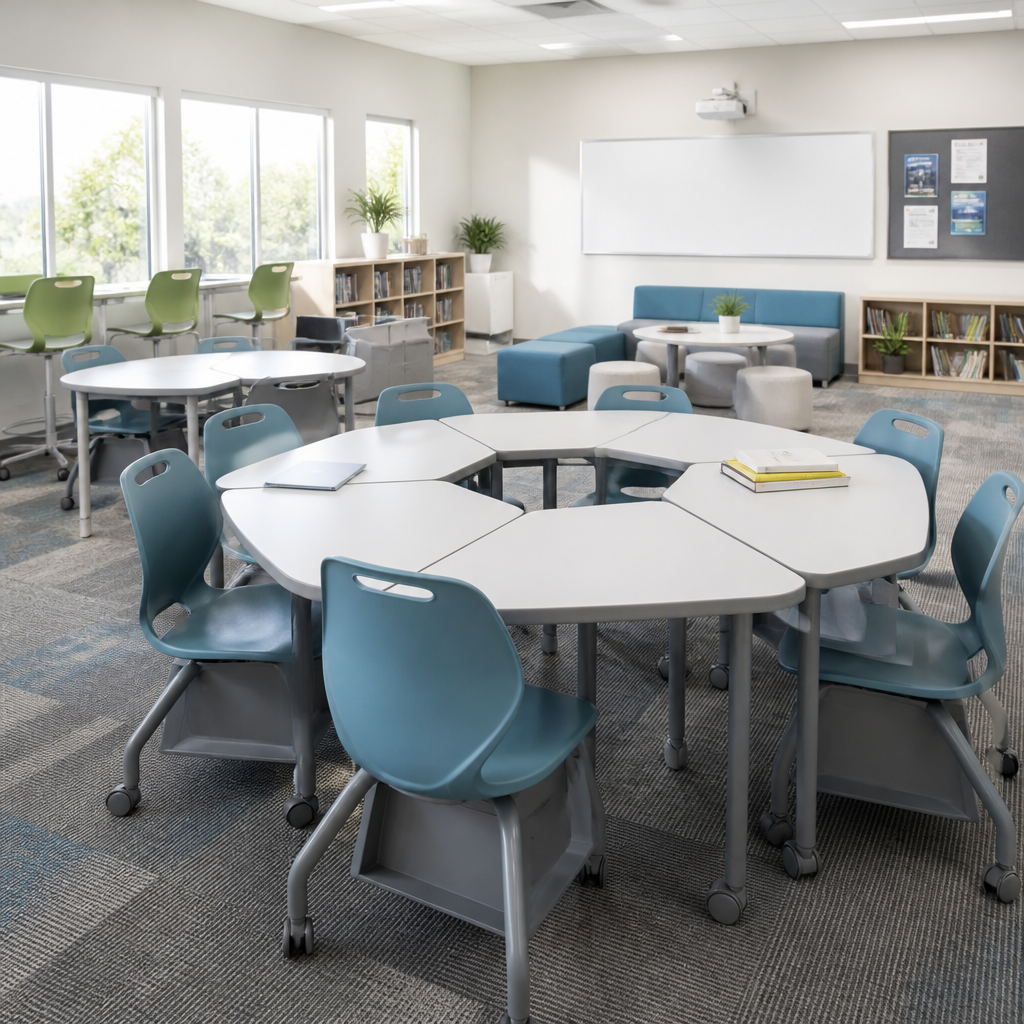
The physical environment of a school significantly influences how students interact with one another. Rigid, fixed seating arrangements can create unintentional barriers to communication, whereas flexible furniture allows students to pivot quickly from independent study to small-group discussions. Modern educational design emphasizes the creation of “learning hubs” where students can congregate around whiteboards, large screens, or collaborative tables to brainstorm and iterate on their ideas.
Beyond physical design, the integration of digital collaboration tools has transformed how groups function. Cloud-based document sharing, virtual whiteboards, and project management platforms allow students to continue their collaborations outside the physical classroom, effectively extending the learning experience beyond the school day. These tools teach students how to manage digital workflows, track progress, and provide constructive feedback in real-time, bridging the gap between classroom theory and practical application.
Developing Critical Thinking Through Group Problem-Solving
When students work in groups to tackle complex, open-ended problems, they are forced to synthesize information from various sources and negotiate different viewpoints. This process of collaborative inquiry often leads to a deeper conceptual understanding than what could be achieved through individual effort alone. When a student is required to explain their reasoning to a peer, they must clarify their own thoughts, identify gaps in their logic, and structure their arguments effectively.
Furthermore, navigating disagreements within a group is a vital part of the learning process. Learning how to navigate conflict with maturity—by focusing on the problem rather than the person and by seeking common ground—prepares students for the interpersonal challenges they will undoubtedly face in adulthood. Educators who treat these moments of friction as opportunities for social-emotional learning enable students to develop greater empathy and patience, which are critical components of long-term success.
The Role of the Teacher as a Facilitator
In a collaborative classroom, the teacher’s role undergoes a significant transformation. Instead of serving as the primary transmitter of information, the teacher becomes a facilitator, a mentor, and a designer of learning experiences. This shift requires a deep level of trust in the students’ ability to take ownership of their own discovery process. The teacher’s primary task becomes creating challenging, well-defined prompts that invite collaboration and providing the necessary scaffolds to guide students through the complexities of their projects.
- Design thoughtful tasks: Assignments should be inherently collaborative, meaning they cannot be easily completed by one person alone.
- Monitor and support: Instead of directing, teachers should circulate throughout the room, observing the dynamics and asking probing questions that help groups overcome roadblocks.
- Assess both process and product: Collaborative learning requires a balanced assessment model that values how students interact and learn together as much as the final project results.
- Reflect together: Dedicated time for reflection—where students think about their own contributions and the effectiveness of their group—is essential for continuous improvement.
Overcoming Challenges in Collaborative Settings
Despite its many benefits, implementing a collaborative framework is not without its difficulties. Teachers often express concerns about grading equity, classroom management, and the risk that some students may disengage. To address these challenges, educators must be intentional about how groups are formed. While friendship-based groups can be comfortable, they are not always the most effective for diverse learning experiences. Strategic grouping—often based on a mix of skill levels or diverse interests—can create more dynamic interactions.
Grading is another area that requires careful consideration. A common concern is “social loafing,” where one student does the work for everyone else. To mitigate this, teachers can combine group assessments with individual components, such as reflective journals, peer evaluations, or individual quizzes that test knowledge acquired during the group project. By ensuring that there is accountability at both the individual and collective levels, teachers can maintain high standards while still fostering a spirit of cooperation.
Preparing Students for a Globalized Future
As we look toward the future, the importance of fostering these skills cannot be overstated. The global challenges we face—from environmental crises to rapid technological shifts—require a generation of thinkers who can collaborate across cultures, disciplines, and geographic boundaries. By prioritizing communication, cooperation, and collective problem-solving in our schools, we are doing more than just teaching students academic content; we are providing them with the fundamental tools they need to thrive in a complex, interdependent world.
The journey toward a truly collaborative educational system is an iterative one. It requires schools to be brave enough to experiment with their instructional methods, invest in professional development for their teachers, and rethink the ways they use time and space. When we embrace this shift, we create an environment where every student is challenged, supported, and given the opportunity to contribute their unique perspectives to the collective intelligence of the classroom. This is not just a trend in pedagogy; it is the necessary evolution of education for the twenty-first century.
Ultimately, the success of any educational system lies in its ability to adapt to the needs of its students. As we continue to refine our approaches to collaborative learning, we must keep the learner at the center of all our decisions. By fostering a sense of community and purpose, we can build educational experiences that are not only effective but also deeply meaningful, preparing students for the realities of life beyond the classroom walls.
0 Comments