
Cultivating Critical Thinking in the Modern Classroom
The Vital Role of Critical Thinking in Modern Education
In the rapidly evolving landscape of the twenty-first century, the traditional educational model—often characterized by rote memorization and the passive absorption of facts—is undergoing a profound transformation. As information becomes ubiquitously available at the touch of a screen, the ability to merely recall data has lost much of its former prestige. Instead, the hallmark of an educated individual today is the capacity for critical thinking: the disciplined process of actively and skillfully conceptualizing, applying, analyzing, synthesizing, and evaluating information gathered from observation, experience, reflection, reasoning, or communication.
For students navigating an era of digital saturation, misinformation, and complex global challenges, critical thinking is not merely an academic advantage; it is an essential survival skill. Educators and parents alike are increasingly recognizing that our schools must evolve from being centers of instruction to being ecosystems of inquiry. By fostering an environment where curiosity is nurtured and assumptions are challenged, we empower the next generation to become not just learners, but architects of their own understanding.
Defining Critical Thinking in the Classroom
Critical thinking is often misunderstood as simply being argumentative or cynical. In reality, it is a constructive, systematic approach to thought. It involves an objective assessment of evidence, a willingness to recognize cognitive biases, and the ability to formulate logical conclusions. In a classroom setting, this manifests as a shift from asking “what” to asking “how” and “why.”
When a history teacher encourages students to compare multiple primary sources about a single event rather than relying solely on a textbook, they are teaching critical thinking. When a science teacher facilitates a lab experiment where the initial hypothesis is proven wrong, and students are asked to re-evaluate their methodology, they are practicing the scientific method in its truest form: as a tool for critical inquiry. This pedagogical shift requires a departure from the “single right answer” paradigm toward a framework that values the process of discovery as much as the outcome.
The Pillars of Analytical Engagement
To cultivate these skills, curricula must be designed with several key pillars in mind. First, there is the cultivation of intellectual humility. Students must learn that it is acceptable—and often necessary—to admit what they do not know. This vulnerability opens the door to deeper learning and encourages students to seek out diverse perspectives. Second, schools must prioritize information literacy. In the age of social media, the ability to discern reliable sources from disinformation is a vital civic responsibility. Finally, teachers must foster metacognition—the ability for students to think about their own thinking processes. By helping students identify how they form opinions, they become more aware of their own biases and more capable of adjusting their views in the face of new evidence.
The Challenges of Implementing Inquiry-Based Learning
While the benefits of teaching critical thinking are widely acknowledged, the practical application in schools faces significant hurdles. The most prominent of these is the pressure of standardized testing. When school management and regional policies prioritize metrics that favor factual recall and standardized outcomes, it becomes difficult for teachers to carve out the time and flexibility needed for deep, inquiry-based exploration. The “teaching to the test” phenomenon often discourages both students and teachers from engaging in the tangential, exploratory conversations that lead to genuine critical insights.
Furthermore, there is a socio-cultural component to this challenge. In some academic cultures, the teacher is viewed as the sole authority of truth. Encouraging students to challenge that authority, even respectfully, can be seen as disruptive. Overcoming this requires a paradigm shift within school administrations. Leadership must champion a culture where students feel safe to express dissent, ask challenging questions, and explore ideas that may not align with conventional wisdom.
Bridging the Gap Between Theory and Practice
How can we bridge the gap between acknowledging the importance of critical thinking and actually integrating it into daily school life? The answer lies in professional development for teachers and the intentional design of learning environments. Teachers require the pedagogical tools to facilitate discussions rather than lead lectures. They need strategies for Socratic questioning, scaffolding complex arguments, and creating collaborative projects that demand problem-solving.
Parents also play a crucial role in this process. Home environments that encourage children to ask questions, explore hobbies, and discuss current events with nuance provide a vital foundation. When parents and schools align their efforts, the result is a more holistic development of the student’s intellect. Students who are encouraged to think critically at home and at school are far more likely to retain that spirit of inquiry into adulthood.
Designing Environments for Exploration
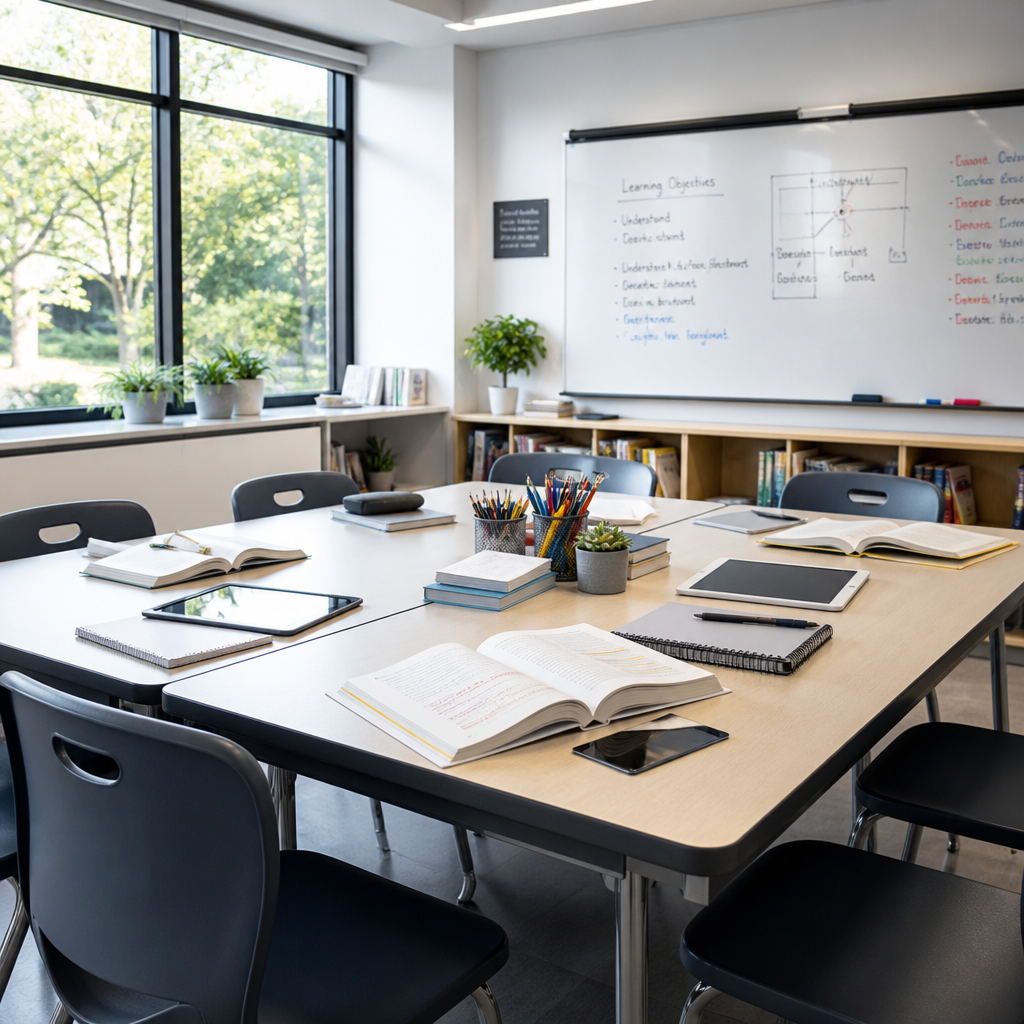
School physical and digital spaces play a significant role in how students approach their studies. Collaborative zones that encourage group work, libraries that offer a vast array of conflicting viewpoints, and digital tools that allow for interactive mapping of information can all serve as catalysts for critical thinking. When school management invests in resources that promote active engagement, they are sending a powerful signal that the institution values intellect over mere compliance.
The Long-Term Impact of a Thinking-Centered Education
The long-term benefits of an education that emphasizes critical thinking extend far beyond the classroom walls. Employers in every industry are currently reporting a massive skills gap; they are not necessarily looking for employees who know all the answers, but for individuals who know how to ask the right questions, navigate ambiguity, and solve problems creatively. In an increasingly automated world, the uniquely human capacity for critical judgment is our most valuable asset.
Moreover, the health of our democratic institutions depends on a citizenry capable of critical thought. Decisions that affect our societies—from public health to environmental policy—require citizens who can synthesize information, understand the nuance of competing arguments, and resist the lure of polarized rhetoric. By fostering these skills in our schools, we are not just educating workers; we are preparing stewards of our future.
Conclusion
Critical thinking is not a luxury or a secondary learning goal; it is the cornerstone of a meaningful education. While the obstacles of standardized systems and traditional teaching methods remain, the drive toward a more inquiry-based approach is both necessary and inevitable. As we continue to refine our pedagogical techniques and embrace new educational technologies, we must never lose sight of the primary objective: to inspire students to think for themselves.
By empowering students to question, analyze, and synthesize, we provide them with the ultimate tool for navigating a complex and uncertain world. The future belongs to those who do not merely accept information as given, but who treat every piece of data as an opportunity to learn, to grow, and to contribute to a more informed and rational society.
0 Comments