
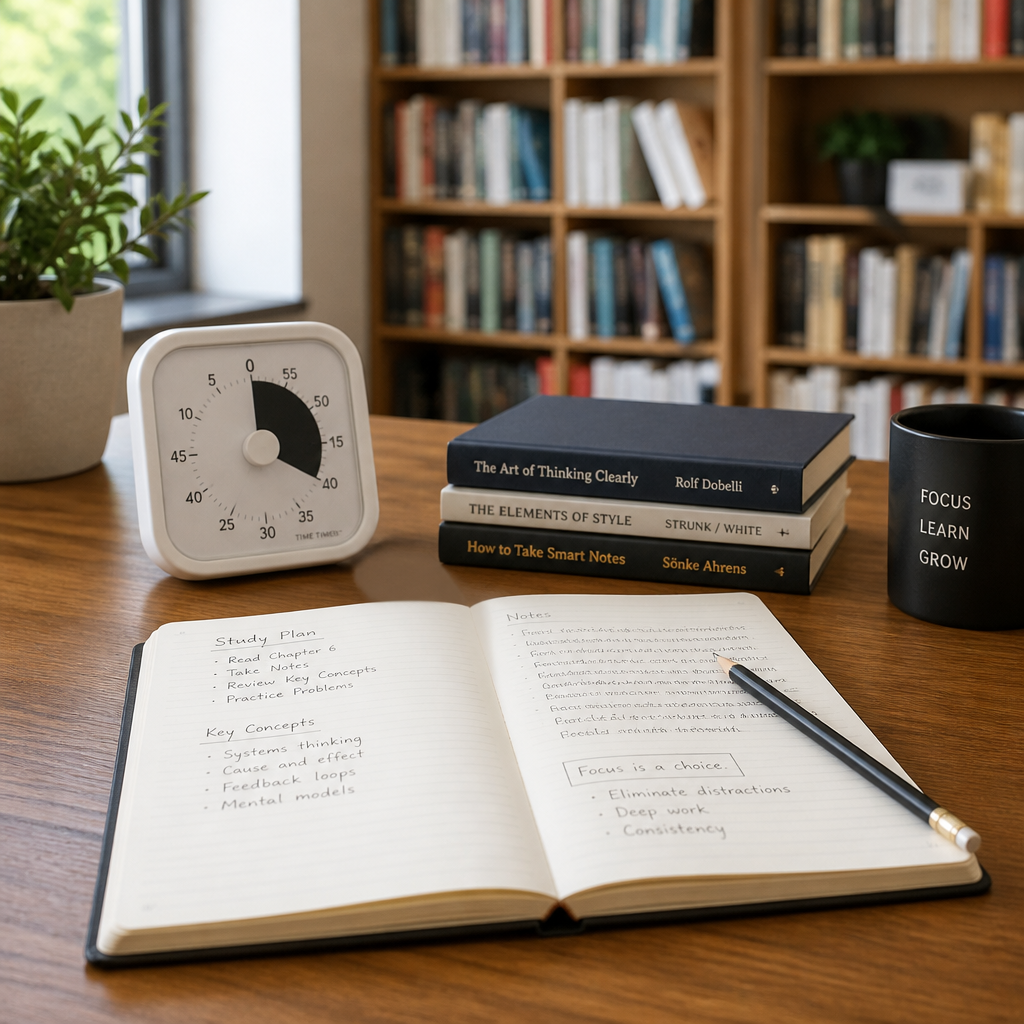
Mastering Productivity: How the Pomodoro Technique Can Transform Your Study Habits
Mastering Productivity: How the Pomodoro Technique Can Transform Your Study Habits
In the high-pressure environment of modern education, students are constantly bombarded with immense workloads, ranging from complex research papers and mathematical problem sets to extensive exam preparations. Managing time effectively is not merely a bonus skill—it is an essential requirement for academic success and personal well-being. Many students fall into the trap of “passive studying,” where they sit for hours with textbooks open but achieve very little true retention. This is where the Pomodoro Technique comes into play as a game-changing methodology for learners of all levels.
Developed in the late 1980s by Francesco Cirillo, the Pomodoro Technique is a time management philosophy that encourages focused work sessions followed by short, rejuvenating breaks. Its brilliance lies in its simplicity and its alignment with the human brain’s natural ability to maintain sustained attention. By breaking study time into manageable chunks, students can bypass the common pitfalls of procrastination, burnout, and mental fatigue, ultimately achieving more in less time.
The Mechanics of the Pomodoro Technique
The core concept of the Pomodoro Technique—named after the tomato-shaped kitchen timer Cirillo used as a university student—is straightforward. It revolves around the idea that deep, focused work is best performed in sprints rather than marathons. The process follows a specific cycle that helps keep the mind sharp and the motivation high throughout a study session.
The Standard Workflow
To implement the technique effectively, you should follow these steps for each study session:
- Step 1: Choose a Task: Select one specific subject or assignment you need to complete. Multitasking is the enemy of productivity, so focus your energy on a single objective.
- Step 2: Set the Timer: Set a timer for 25 minutes. This 25-minute block is known as one “Pomodoro.” During this time, commit to working exclusively on your selected task.
- Step 3: Work with Focus: Devote your full attention to the task. If an unrelated thought pops into your head, write it down on a piece of paper to handle later and immediately return to your work.
- Step 4: Take a Short Break: Once the 25 minutes are up, stop immediately. Take a 5-minute break. Step away from your desk, stretch, grab a glass of water, or simply breathe. Do not engage in social media or complex activities that might distract you further.
- Step 5: Repeat the Cycle: After your break, begin your next Pomodoro. After completing four consecutive cycles, take a longer, more restorative break of 15 to 30 minutes.
Why It Works for Academic Achievement
The science behind the Pomodoro Technique is rooted in how our brains process information and maintain focus. Long, uninterrupted hours of studying often lead to a phenomenon known as “vigilance decrement,” where our ability to pay attention decreases over time. By incorporating structured intervals, we keep our brains in a state of high readiness.
Combating Procrastination
Procrastination is often not a result of laziness, but of anxiety regarding the scale of a task. When we face a daunting project, our brains recoil, leading us to avoid the work. The Pomodoro Technique makes the task feel less intimidating by promising that we only have to commit to 25 minutes of work. This lowered barrier to entry is often enough to overcome the initial resistance to getting started.
Preventing Cognitive Burnout
The brain consumes a significant amount of energy when engaged in deep, focused learning. Without regular breaks, the quality of our thought processes begins to degrade. The 5-minute intervals provided by this method serve as a mental “reset button,” allowing the brain to consolidate information and clear out mental clutter. This keeps students refreshed, enabling them to study for longer periods throughout the day without the typical afternoon slump.
Building Better Time Awareness
One of the hidden benefits of this technique is that it forces us to confront how we actually spend our time. When you start tracking how many Pomodoros it takes to complete a chapter or finish a math assignment, you begin to develop a more accurate sense of your own capacity. Over time, this improves your ability to plan your academic schedule, set realistic goals, and manage your time more efficiently during exam periods.
Strategies for Implementation and Adaptation
While the standard 25/5-minute cycle is the recommended starting point, it is not a rigid law. Students have different attention spans and learning needs, and the technique can be adapted to better suit individual workflows. However, it is essential to approach any modification with intention rather than letting laziness dictate your pace.
Adjusting the Time Blocks
Some learners, particularly those tackling complex subjects like advanced mathematics or creative writing, may find that 25 minutes is too short to reach a state of “flow.” In these cases, it may be beneficial to extend the work interval to 40 or 50 minutes, followed by a 10-minute break. The key is to ensure that the work block remains long enough to produce results, but short enough to maintain high levels of engagement.
Managing External Distractions
In a digital age, our devices are constant sources of interruption. To get the most out of your Pomodoro sessions, you must treat your study space as a sanctuary. Silence your notifications, put your phone in another room, and clear your workspace of unnecessary clutter. If you are working on a computer, consider using browser extensions that block distracting websites during your active intervals. The goal is to create an environment where the only thing that matters is the task at hand.
Planning for Success
The efficacy of the Pomodoro Technique is significantly enhanced when paired with proper planning. Before you start your first Pomodoro of the day, take five minutes to map out your goals. Decide exactly what you want to achieve by the end of your study session. Having a clear destination ensures that you do not waste your precious 25-minute blocks trying to figure out what to do next. When your plan is clear, you can dive straight into productive work the moment the timer starts.
Beyond Studying: A Lifestyle Shift
While this technique is often introduced in the context of academic preparation, its benefits extend far into personal development. The discipline learned through regular Pomodoro usage—the ability to set a timer, ignore distractions, and finish a cycle—is a foundational skill for professional life. It transforms work from a chore to be avoided into a series of achievable, rewarding challenges. By viewing study time as a game of cycles rather than a mountain to climb, students can develop a healthier, more sustainable relationship with their education.
Ultimately, the Pomodoro Technique is about mastering your own focus. It empowers students to take control of their schedules, reduces the crushing weight of impending deadlines, and fosters a sense of accomplishment that builds confidence over time. Whether you are prepping for a final exam or writing your first research paper, integrating these short, focused sprints into your routine can lead to significant improvements in both your grades and your overall quality of life as a student.
Remember that consistency is key. Like any habit, the Pomodoro Technique takes practice to master. Do not be discouraged if your first few attempts feel slightly awkward or if you find yourself tempted to check your phone before the 25 minutes are up. Stick with it, refine your approach based on what works for your unique cognitive style, and you will soon find that you are capable of far more focus and efficiency than you ever thought possible.
Final Thoughts
The Pomodoro Technique is not merely a tool for time management; it is a mindset shift that recognizes the value of our finite attention. In a world characterized by endless distractions, the ability to focus intentionally is a competitive advantage. By committing to the simple, rhythmic structure of work and rest, students can reclaim their time and achieve their academic goals with less stress and greater clarity. Embrace this method, tailor it to your needs, and watch how it revolutionizes your journey toward academic excellence.
0 Comments