
Nurturing Success: The Critical Importance of Soft Skills in Education
The Essential Role of Soft Skills in Modern Education
In an era increasingly dominated by rapid technological advancement and artificial intelligence, the traditional focus on rote memorization and standardized testing is undergoing a profound shift. Educators, parents, and school administrators are beginning to realize that while academic knowledge provides the foundation for intellectual growth, it is the development of soft skills that truly prepares students for the complexities of the 21st-century workforce and society. Soft skills—often referred to as interpersonal skills, social-emotional learning, or non-cognitive skills—encompass a wide range of attributes, including critical thinking, collaboration, communication, adaptability, and emotional intelligence.
The transition from a knowledge-based economy to an innovation-based economy means that students are no longer just evaluated by what they know, but by how they apply that knowledge, interact with others, and navigate unpredictable challenges. Integrating these skills into the school curriculum is not merely an optional pedagogical enhancement; it is an absolute necessity for preparing well-rounded, resilient, and successful individuals.
Defining Soft Skills in a Classroom Context
Soft skills can be difficult to quantify compared to a mathematics equation or a historical date, which often leads to them being sidelined in busy academic schedules. However, these skills are the essential building blocks for student success. They include:
- Critical Thinking and Problem Solving: The ability to analyze information objectively, identify biases, and formulate effective solutions to complex problems.
- Effective Communication: The capacity to convey ideas clearly through verbal, written, and digital media, as well as the vital skill of active listening.
- Collaboration and Teamwork: Working harmoniously within diverse groups, understanding different perspectives, and contributing to collective goals.
- Adaptability and Flexibility: Maintaining productivity and a positive mindset when faced with change, ambiguity, or unexpected obstacles.
- Emotional Intelligence: Developing self-awareness, empathy for others, and the capacity to regulate one’s emotions in stressful situations.
When teachers prioritize these areas, they create a learning environment where students feel safe to express themselves, take risks in their learning, and grow from their mistakes. This shift requires a departure from traditional “sage-on-the-stage” teaching styles toward more interactive, project-based, and student-centered approaches.
The Impact of Soft Skills on Student Development
The benefits of fostering soft skills go far beyond better classroom behavior. Research has consistently shown that students who possess strong interpersonal skills exhibit higher levels of academic engagement, lower rates of anxiety, and a greater sense of belonging within their school communities. Furthermore, these students tend to demonstrate better conflict resolution abilities, leading to healthier peer relationships and a more inclusive school culture.
From an educational development perspective, focusing on soft skills helps students cultivate a growth mindset. When students understand that their communication styles, resilience, and collaborative abilities are malleable rather than fixed traits, they become more invested in their personal development. This mindset is critical for lifelong learning, as it empowers students to continuously upgrade their skills long after they have left the formal school system.
Strategies for Integrating Soft Skills into the Curriculum
Schools that successfully emphasize soft skills do not necessarily need to create entirely new subjects. Instead, they embed these competencies within existing frameworks. Here are several effective strategies:
Project-Based Learning (PBL)
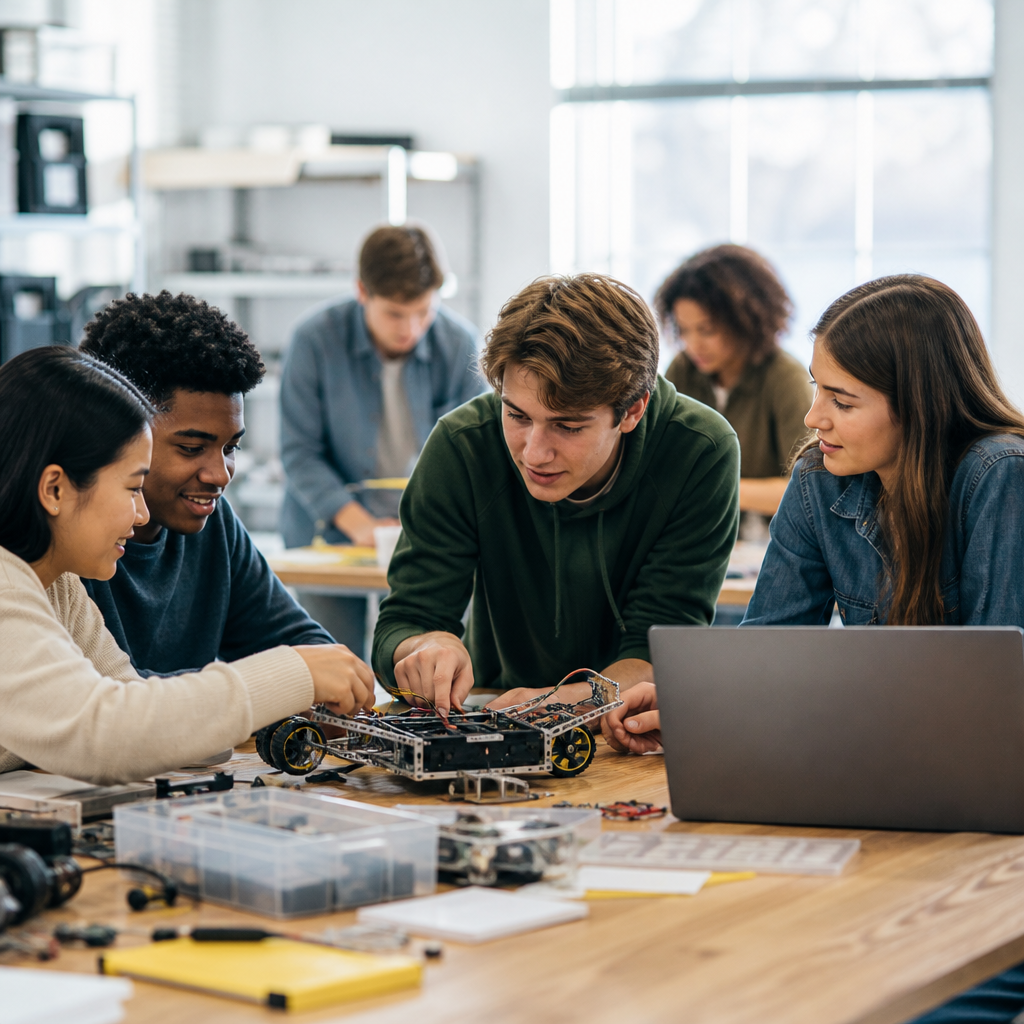
Project-based learning is perhaps the most natural environment for developing soft skills. By working on long-term, real-world projects, students are forced to communicate, collaborate, and manage their time effectively. When a group of students must create a prototype for a science fair or organize a community service initiative, they must negotiate roles, handle interpersonal conflicts, and iterate on their ideas based on feedback—all of which are essential real-world soft skills.
Reflective Practice
Incorporating regular opportunities for reflection is essential. Whether through journals, exit tickets, or student-led conferences, reflecting on their own learning process helps students develop self-awareness. Asking students to identify what challenges they faced during a group project and how they overcame them—rather than just focusing on the final grade—teaches them to value their own internal growth.
Modeling by Educators
Teachers are the most influential models of soft skills in a school environment. When an educator handles a classroom disruption with calm, communicates expectations transparently, or demonstrates openness to student feedback, they are teaching through behavior. Professional development programs that focus on helping teachers refine their own interpersonal communication and emotional regulation are vital, as the “hidden curriculum” of how an educator behaves often leaves a deeper impression than the lesson plan itself.
Bridging the Gap Between School and Home
The responsibility of nurturing soft skills does not fall solely on the shoulders of teachers. Parents play a pivotal role in reinforcing these competencies outside of the classroom. When schools and parents align their efforts, students receive consistent messaging about the value of empathy, perseverance, and collaboration.
Schools can foster this partnership by being transparent about their commitment to holistic student development. Instead of only reporting academic marks, parent-teacher conferences can include discussions about a child’s progress in teamwork, leadership, and emotional regulation. Providing parents with resources on how to facilitate critical conversations at home—such as asking open-ended questions about a child’s day rather than focusing purely on test scores—can bridge the gap between academic life and character growth.
Preparing for the Future of Work
The modern workplace is characterized by automation and the rapid pace of change. Tasks that are repetitive or logic-heavy are increasingly performed by algorithms. What remain uniquely human are those capacities that fall under the umbrella of soft skills: negotiation, creativity, moral judgment, and the ability to inspire others. By prioritizing these skills today, schools are ensuring that their students will not only be “college-ready” but also “life-ready” and “career-ready.”
As we continue to navigate the 21st century, the definition of a successful school will increasingly be tied to its ability to produce graduates who are both intellectually capable and interpersonally adept. Education is, at its core, a human endeavor. Investing in the soft skills of students is an investment in the human capital necessary to solve the global challenges of tomorrow. It is time to acknowledge that the most important lessons taught in the classroom may not be the ones found in textbooks, but the ones that allow students to navigate the world with intelligence, empathy, and grace.
Ultimately, the institutional shift toward valuing these non-cognitive traits reflects a larger understanding that success is not a solo pursuit. Whether in higher education or the global marketplace, the ability to build effective relationships and adapt to evolving landscapes is the ultimate competitive advantage. Schools that lead in this area will undoubtedly set the standard for educational excellence in the decades to come.
0 Comments