
Redefining the Learning Landscape: The Future of Classroom Design
The Evolution of Modern Classroom Design and Its Impact on Learning
The traditional image of a classroom—rows of desks facing a chalkboard, a teacher at the front, and students sitting in static silence—is rapidly becoming a relic of the past. As we navigate the complexities of the 21st century, the physical environment of our schools is undergoing a profound transformation. Educators, architects, and school administrators are increasingly recognizing that the layout, lighting, and flexibility of a learning space have a direct, measurable impact on student engagement, collaboration, and academic performance.
Modern classroom design is no longer just about aesthetics or maximizing seating capacity. It is about creating a holistic, learner-centric environment that supports diverse pedagogical approaches. When we rethink the classroom, we are essentially rethinking the way knowledge is transferred, internalized, and applied. This shift represents a transition from teacher-led instruction to student-centered inquiry, requiring spaces that are as dynamic as the students who inhabit them.
The Neuroscience Behind Spatial Learning
Why does the physical environment matter so much? Scientific research into the neuroscience of learning suggests that the brain is highly responsive to its surroundings. Elements such as natural light, air quality, acoustic comfort, and even the color palette of a room play significant roles in cognitive processing. A cluttered, dark, or noisy environment can induce stress, which effectively shuts down the brain’s ability to focus and retain information.
Conversely, classrooms that prioritize comfort and natural light tend to see higher levels of student attendance and academic achievement. Providing students with a sense of ownership over their space can also increase motivation. When a child feels comfortable in their environment, their cognitive load is reduced, allowing them to dedicate more mental energy to the tasks at hand—whether that is solving complex mathematical problems or engaging in a spirited classroom debate.
Designing for Flexibility and Collaboration
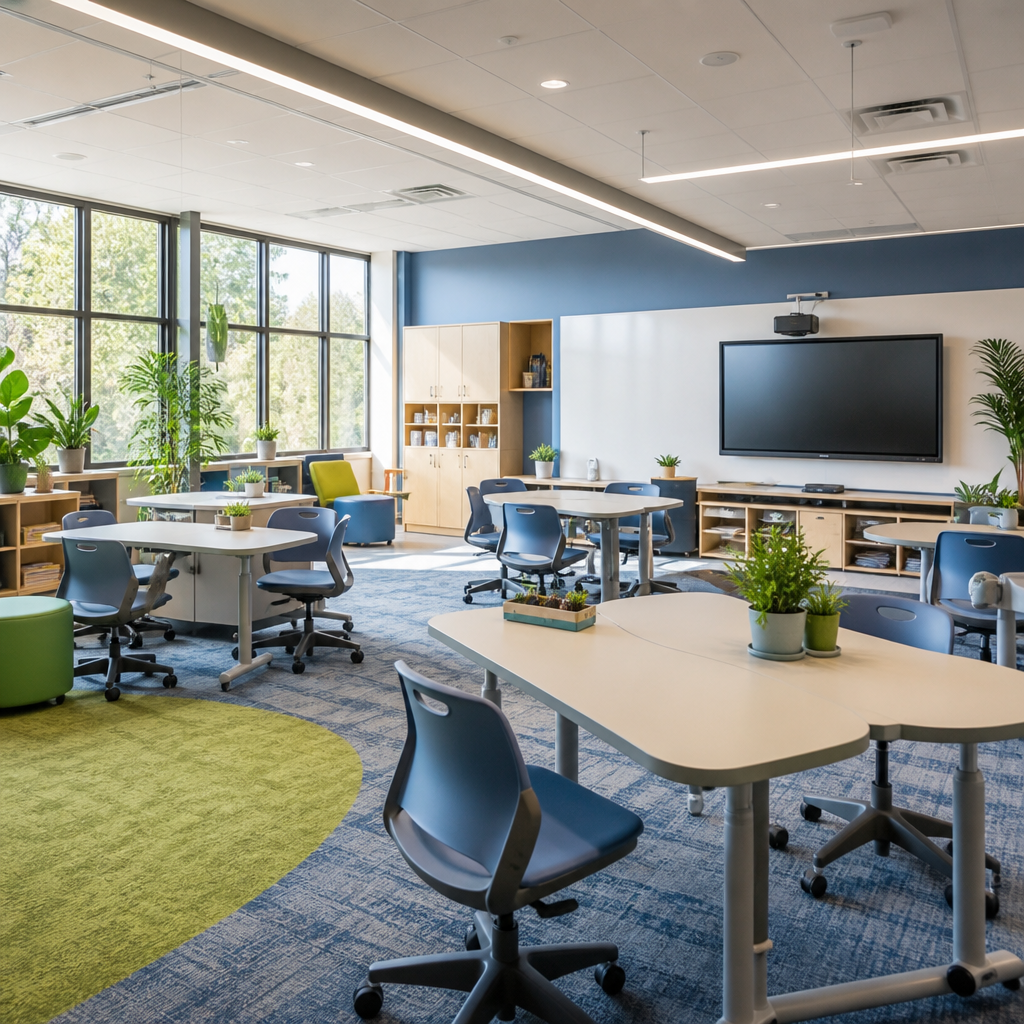
One of the most critical trends in contemporary educational facility management is the move toward modular furniture. The days of fixed desks bolted to the floor are, thankfully, largely behind us. Modern schools are investing in furniture that can be easily rearranged to support different types of learning activities.
For example, a classroom might start the day with students sitting in a large circle for a morning meeting. By midday, those same desks might be clustered into groups of four for a collaborative science project. By the afternoon, individual partitions might be set up to allow for quiet, independent reading time. This level of flexibility allows teachers to pivot seamlessly between teaching methods, fostering a learning experience that is truly personalized.
Beyond individual furniture, there is an increasing demand for “breakout spaces.” These are small nooks or corridors within or adjacent to the classroom where small groups of students can go to work on projects without interrupting the flow of the main lesson. These areas help reduce noise, allow for deep work, and provide a necessary sense of agency for older students who are learning to manage their own time and output.
Technology Integration: Beyond the Screen
Educational technology (EdTech) is a major driver of classroom change. However, incorporating technology is about much more than simply installing interactive whiteboards or ensuring every student has a tablet. It is about designing the infrastructure to support these tools. Wireless connectivity must be robust, and power outlets should be strategically placed to ensure that devices can be charged without creating hazards or clutter.
More importantly, the integration of technology should facilitate movement and social interaction rather than isolation. Modern classroom designs often incorporate media hubs or “maker spaces” where students can interact with 3D printers, robotics kits, or high-end design software. These hubs act as the physical manifestation of digital learning, turning the classroom into a laboratory where ideas move from the screen into the real world.
Acoustics and the Sensory Environment
In many older school buildings, poor acoustics remain a primary barrier to learning. When a classroom suffers from high reverberation, it becomes difficult for students to distinguish between the teacher’s voice and background noise. For young learners or those with hearing impairments, this can create a significant disadvantage, often leading to frustration and disengagement.
Effective school design now emphasizes sound-absorbent materials—carpeting, acoustic ceiling tiles, and wall panels—to ensure that clear communication can take place. Furthermore, lighting design has moved away from harsh, flickering fluorescent lights toward tunable LED systems. These systems can change intensity and color temperature throughout the day to match the natural circadian rhythms of students, which is known to improve focus during lessons and promote better mood stability.
The Role of Biophilic Design in Schools
Biophilic design—the practice of connecting people to nature within the built environment—is gaining momentum in educational architecture. Even in urban settings where green space may be limited, schools are finding creative ways to introduce natural elements. This might include indoor gardens, living walls, or simply ensuring that every classroom has a window with a view of greenery.
Studies have shown that exposure to natural elements can reduce stress, improve concentration, and increase creativity. By blurring the lines between the indoor classroom and the outdoor world, schools can provide students with a sense of tranquility that supports their mental health. Access to nature is not just a luxury; it is a fundamental human need that, when satisfied in a school setting, can lead to more resilient and focused learners.
Sustainability as a Living Lesson
Designing modern classrooms also involves a commitment to sustainability. Schools that prioritize energy efficiency, water conservation, and sustainable building materials serve as living laboratories for students. When a school building operates with solar panels, a rainwater harvesting system, or a composting program, the building itself becomes a tool for teaching students about environmental responsibility.
This approach moves beyond textbooks. It allows students to engage with real-world problems and witness the impact of sustainable technology firsthand. A school building that is designed with the planet in mind can inspire students to think critically about their own environmental footprint, fostering a generation of active, environmentally conscious citizens.
Challenges and Future Outlook
While the vision for modern classroom design is compelling, the transition presents significant challenges. Many schools are operating in aging infrastructure that is difficult and expensive to renovate. Furthermore, there is often a cultural hurdle; many teachers are accustomed to traditional settings and may require professional development to learn how to effectively utilize new, flexible environments.
School management teams must approach these renovations as a long-term investment. It is not enough to buy expensive, modular furniture; the change must be supported by a change in pedagogical philosophy. Leaders need to communicate with teachers, students, and parents throughout the process to ensure that the new designs truly meet the community’s needs. When everyone is involved in the vision, the transition becomes a collaborative effort rather than an top-down mandate.
Conclusion
The classroom of the future is not a destination, but a process of constant adaptation. By focusing on flexibility, sensory well-being, technological integration, and a connection to nature, we can create learning environments that inspire curiosity and support the diverse needs of every student. As we look ahead, the physical school will remain a vital hub for social and academic growth, proving that where we learn is just as important as what we learn. Investing in these spaces today is an investment in the intellectual and emotional well-being of the next generation.
0 Comments