
Redesigning Learning: The Future of Modern Classroom Environments
The Evolution of Modern Classroom Environments
The traditional image of a classroom—rows of wooden desks facing a chalkboard, with a teacher at the front dispensing information—is rapidly becoming a relic of the past. As we move further into the 21st century, educational institutions are reimagining what a learning environment should look like, feel like, and function like. This evolution is not merely about aesthetics or modern furniture; it is a fundamental shift in how we understand the relationship between physical space, technology, and pedagogical strategy. Creating an effective modern classroom environment requires a deep dive into how students learn best, how teachers can facilitate deeper engagement, and how technology can bridge the gap between abstract concepts and real-world application.
The physical environment in which a student spends most of their day acts as a “third teacher.” If the walls are sterile, the lighting is harsh, and the seating is rigid, the implicit message is that learning is a passive, uniform experience. Conversely, classrooms designed with flexibility, comfort, and collaborative potential in mind signal to students that their input is valued, their movement is natural, and their creative process is supported. Modern school management teams are increasingly recognizing that student performance and well-being are inextricably linked to the design of their learning habitats.
Flexibility as the Core Design Philosophy
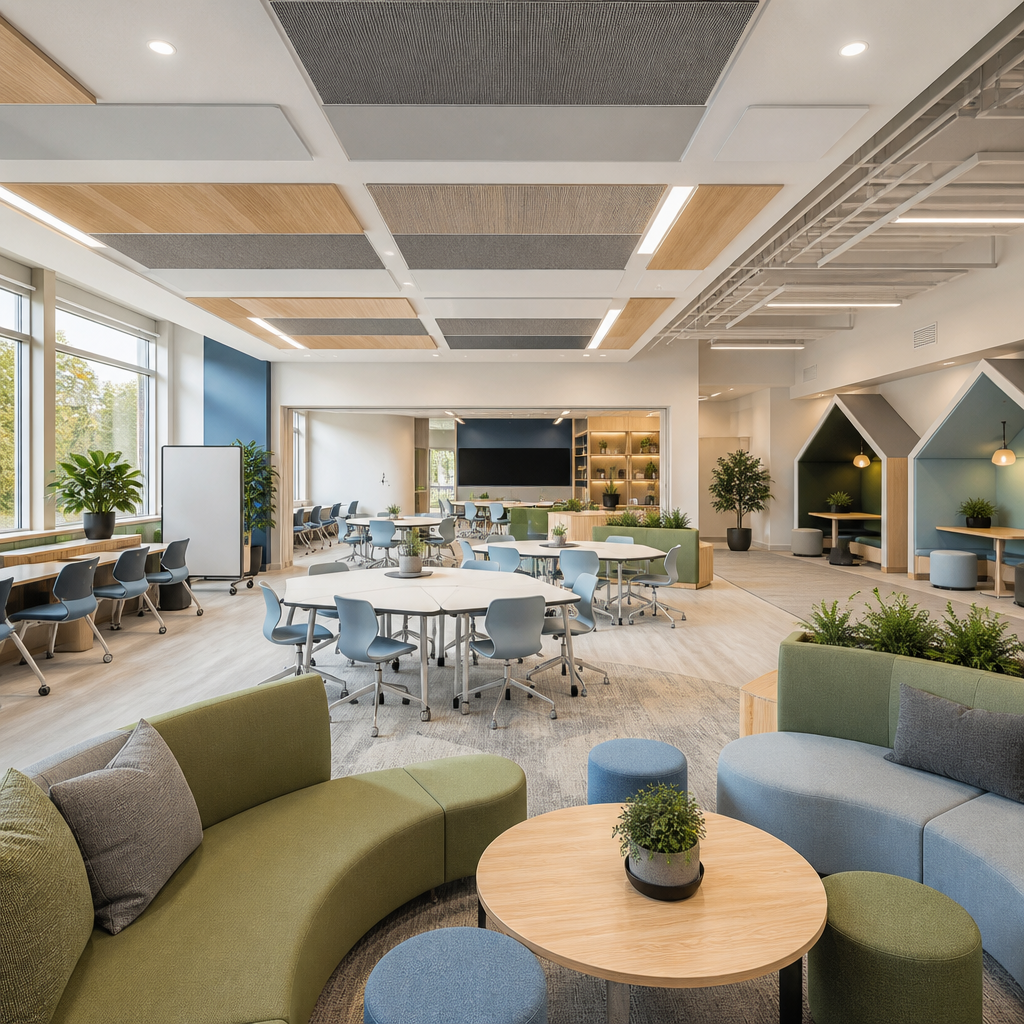
At the heart of the modern classroom is the concept of agility. No two lessons are identical, so why should the seating arrangement be static? Teachers today are encouraged to abandon fixed rows in favor of modular furniture that can be reconfigured in minutes. This shift allows for a seamless transition between direct instruction, small group collaboration, and independent deep work. When a teacher can shift a classroom from a theater-style setup for a guest speaker into pods for a brainstorming session, the momentum of the lesson remains uninterrupted.
Flexible furniture options include standing desks, bean bags, ergonomic wobble stools, and writable surfaces like whiteboard tables. These choices accommodate different learning styles and physiological needs. For instance, some students may find that standing or pacing helps them concentrate better during complex tasks, while others may require a quiet, enclosed corner to process information. By offering a variety of seating options, schools acknowledge that one size rarely fits all in an educational context.
The Role of Sensory Design in Learning
The sensory experience of a classroom—encompassing lighting, acoustics, and air quality—plays a significant role in student achievement. Harsh fluorescent lighting has been linked to increased student fatigue and irritability. In contrast, access to natural daylight has been shown to improve mood, attendance, and even academic performance. Where possible, modern school design prioritizes large windows and adjustable artificial lighting that can mimic natural daylight cycles.
Acoustics are equally vital. In a busy, collaborative classroom, noise can quickly become overwhelming, hindering focus. Integrating sound-dampening materials like acoustic ceiling tiles, wall panels, and even carpets can significantly reduce echoes and background clamor. A quiet, acoustically balanced environment allows students to engage in discussions without having to strain to hear, fostering a more inclusive and productive atmosphere for learners of all backgrounds and abilities.
Integrating Technology Without Distraction
Technology is a tool, not a solution in itself. The most effective classrooms are those where technology is so seamlessly integrated that it becomes an invisible facilitator of learning rather than the focal point. This means moving away from simply having one laptop per student to creating ecosystems where digital tools enhance collaborative problem-solving, data analysis, and creative expression. Interactive whiteboards, tablets, and cloud-based platforms are standard, but the key is how they are implemented.
Successful technology integration empowers students to take ownership of their learning. It allows for personalized instruction, where a student can access resources tailored to their current proficiency level, while the teacher moves around the room to offer high-touch guidance where it is needed most. When technology is paired with thoughtful layout design—such as “media hubs” where small groups can review data together—it amplifies the collaborative nature of modern education.
Building Community Through Spatial Design
Education is inherently a social process. A well-designed classroom should be an incubator for community, where students feel safe to express ideas, challenge assumptions, and support one another. Spatial design can actively cultivate these behaviors. For example, creating a “soft seating” area with comfortable chairs and shelves of books can transform a corner of the room into a space for reflection or social connection, mirroring a library or a modern workspace rather than a factory floor.
Transparency and visibility are also important factors. The modern classroom is often part of a larger ecosystem of learning. Some schools are experimenting with glass walls that allow students to see other groups working, which can foster a sense of shared purpose and curiosity. Furthermore, incorporating spaces for displaying student work—not just the finished, perfect products, but works-in-progress—validates the learning process and builds a sense of pride in the classroom community.
Safety, Inclusivity, and Accessibility
A truly modern classroom is inclusive. This means prioritizing Universal Design for Learning (UDL) in the physical environment. Every student, regardless of their physical abilities or neurodiversity, should be able to navigate the space independently and feel that it was designed with their needs in mind. This includes wide walkways for mobility aids, adjustable height workstations for students who use wheelchairs, and carefully chosen color palettes that avoid over-stimulation for neurodivergent learners.
Safety is also paramount, but it should be addressed in a way that does not make the classroom feel restrictive. Clear sightlines allow teachers to monitor the room effectively without hovering, which promotes a balance between supervision and student autonomy. When students feel safe and respected, their capacity for critical thinking and creative exploration expands significantly.
Preparing for the Future of Education
As we look toward the future, the boundaries of the “classroom” will continue to blur. Learning is increasingly moving into outdoor spaces, community centers, and digital environments. However, the physical school building will remain the home base for social and emotional development. The goal is to create environments that are “future-proof”—spaces that can adapt as educational theories evolve and as the world outside the school walls changes.
Schools must focus on sustainability in their design, not just for the sake of the environment, but to provide a curriculum-integrated experience for students. A classroom that utilizes energy-efficient systems, indoor plants, and natural ventilation serves as a living laboratory, teaching students about ecology and stewardship simply by existing.
Investing in modern classroom design is an investment in human potential. It requires school administrators, teachers, and parents to collaborate on a vision that prioritizes the student experience above all else. When we treat the classroom as a dynamic, evolving organism rather than a static container, we provide the best possible foundation for the thinkers, innovators, and leaders of tomorrow. The shift toward purposeful, student-centered space is one of the most important developments in contemporary education, ensuring that our schools are as vibrant and forward-thinking as the children who learn within them.
Ultimately, the transformation of classrooms is a recognition that learning is an active, human-centered endeavor. By rethinking the physical, technological, and social architecture of our schools, we create environments that don’t just teach students content, but also teach them how to be collaborative, resilient, and curious individuals. As schools move forward, the focus will remain on building spaces that inspire, support, and challenge every student, ensuring that the legacy of education remains one of empowerment and growth.
0 Comments