
Transforming the Classroom: Embracing Student-Centered Learning in Modern Education
The Evolution of Modern Pedagogical Approaches
The landscape of education is currently undergoing a profound transformation. Traditional models, which have long relied on passive learning and rote memorization, are being systematically challenged by innovative, student-centered methodologies. This shift is not merely a matter of incorporating new technology into the classroom; it represents a fundamental change in how we perceive the roles of students, teachers, and the physical learning environment itself. As we move further into the 21st century, the demand for adaptable, critical thinkers has never been higher, forcing schools to re-evaluate how they foster knowledge and skill acquisition.
Educational leaders and policymakers are increasingly recognizing that the one-size-fits-all model of schooling is insufficient for the diverse needs of modern learners. Instead, there is a growing emphasis on personalized education, where instruction is tailored to the individual pace and interests of each student. This transition requires a significant investment in teacher training, infrastructure, and pedagogical research, yet the long-term benefits for student engagement and academic success are undeniable.
Shifting from Instruction to Facilitation
One of the most significant changes in the contemporary educational paradigm is the shifting role of the classroom teacher. Historically, the teacher was viewed as the primary repository of knowledge, responsible for delivering content to students who acted as passive recipients. Today, the most effective educators are acting as facilitators, mentors, and guides. Their primary responsibility is no longer to impart facts but to curate learning experiences that encourage inquiry, collaboration, and problem-solving.
This transition requires teachers to develop a sophisticated set of soft skills, including active listening, emotional intelligence, and the ability to differentiate instruction in real-time. By fostering a classroom culture where questions are valued as much as answers, educators empower students to take ownership of their learning. This shift creates a sense of agency that is critical for long-term academic and professional success, ensuring that students do not just memorize information but understand how to apply it in complex, real-world contexts.
The Impact of Project-Based Learning
Project-based learning (PBL) has emerged as a cornerstone of this new pedagogical movement. By centering curricula around complex, multi-faceted problems, schools can create environments that simulate real-world challenges. In a PBL-focused classroom, students are tasked with investigating a topic, designing a solution, and presenting their findings to an audience. This process integrates diverse disciplines—such as mathematics, history, and communication arts—into a single coherent project.
The beauty of this method lies in its ability to keep students engaged over extended periods. Because they are working toward a tangible goal, the relevance of their studies becomes immediately apparent. Moreover, PBL naturally incorporates soft skills like teamwork, project management, and public speaking, which are often overlooked in standard lecture-based formats. When students move beyond textbooks to solve authentic problems, they develop a deeper, more resilient understanding of the subject matter.
Leveraging Technology for Personalized Pathways
While technology is often misconstrued as a panacea for all educational challenges, its true value lies in its potential to facilitate personalized learning pathways. Adaptive software, for instance, allows for individualized learning plans that adjust the level of difficulty based on a student’s performance. If a student is excelling in a particular mathematical concept, the software can provide more challenging material; conversely, if a student is struggling, the system can provide supplemental resources and scaffolding to help bridge the gap.
This data-driven approach does not replace the teacher; rather, it provides educators with valuable insights into student progress. By analyzing real-time data, teachers can identify patterns in student performance that might otherwise go unnoticed. They can then intervene with precision, offering targeted support exactly where it is needed most. This synthesis of human mentorship and digital toolsets creates a powerful synergy that maximizes the potential for every learner in the classroom.
Fostering a Culture of Collaborative Inquiry
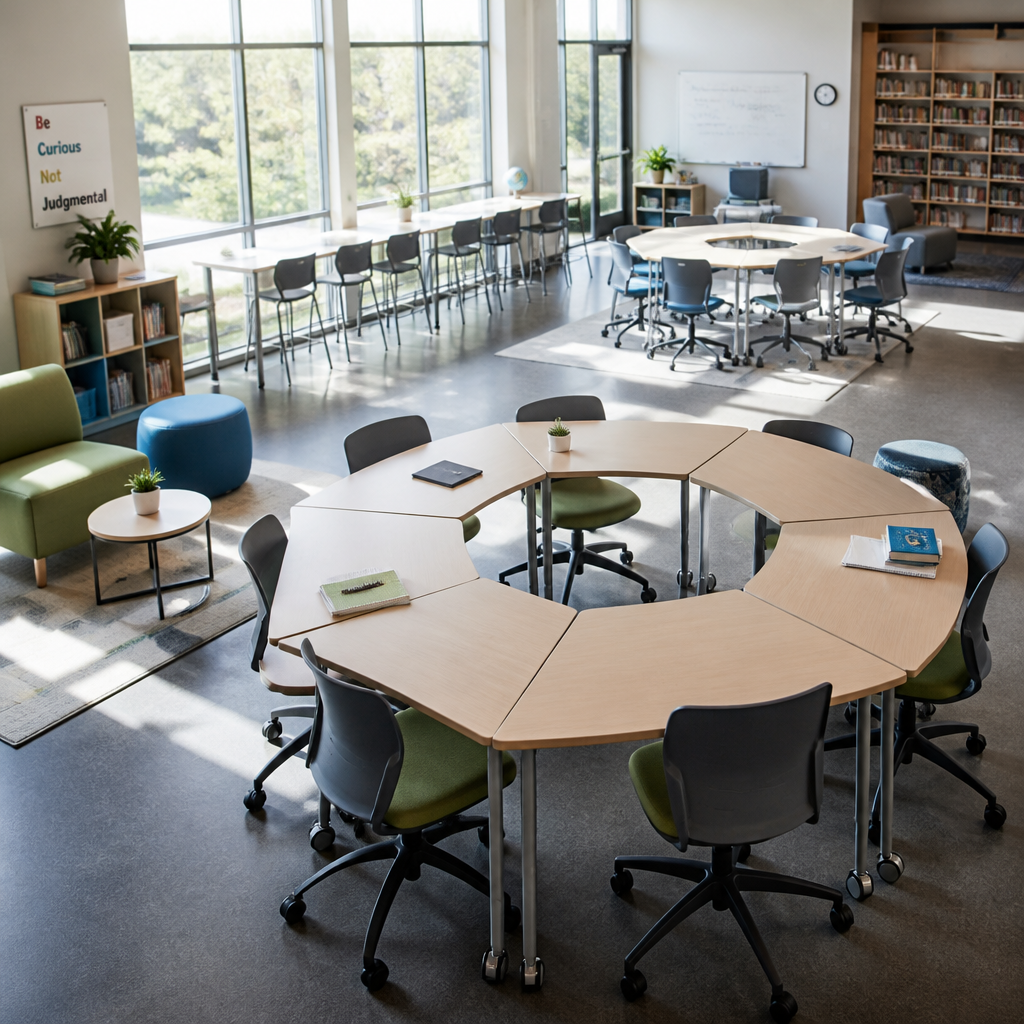
Modern education places a high value on the development of collaborative skills. In an increasingly globalized world, the ability to communicate effectively and work as part of a diverse team is perhaps the most critical skill a student can acquire. Schools are responding by redesigning learning spaces to encourage movement and interaction. The traditional rows of desks are being replaced by flexible furniture configurations that support group discussions, brainstorming sessions, and peer-to-peer instruction.
Collaboration is not just about group work; it is about cultivating a culture where students feel safe to voice their ideas, test hypotheses, and learn from mistakes. A healthy learning community is built on the foundation of psychological safety, where students know that their contributions are valued. This environment fosters a growth mindset, encouraging learners to embrace challenges rather than retreat from them. When students learn how to think collectively, they become better equipped to tackle the societal challenges that require interdisciplinary cooperation.
Assessing Beyond the Standardized Test
The reliance on standardized testing has long been a subject of debate in education circles. While these assessments provide a snapshot of student performance, they often fail to capture the nuance of critical thinking, creativity, or collaborative abilities. Progressive schools are now adopting more holistic assessment strategies, such as portfolios, performance-based tasks, and self-reflection logs. These methods provide a more comprehensive view of a student’s development over time.
Portfolio-based assessment, in particular, allows students to curate their best work, reflecting on their growth and identifying areas for future development. This process encourages metacognition—the ability to think about one’s own thinking. When students reflect on their educational journey, they become more intentional learners, setting their own goals and tracking their progress against their own benchmarks rather than strictly against their peers. This approach fosters a sense of personal pride and achievement that is often lost in high-stakes testing environments.
Supporting the Holistic Development of the Student
The academic success of a student is inextricably linked to their emotional and social well-being. Schools are increasingly adopting Social-Emotional Learning (SEL) frameworks to help students develop the self-awareness, empathy, and resilience necessary to navigate the complexities of life. An education that focuses solely on academic metrics while ignoring the emotional health of the child is incomplete.
Integrating SEL into the daily curriculum helps students manage stress, build healthy relationships, and make responsible decisions. When schools create a supportive atmosphere where social and emotional development is treated with as much gravity as literacy or numeracy, the overall school climate improves. Teachers report fewer behavioral issues, and students show increased engagement and higher levels of academic attainment. Ultimately, we must view students as whole human beings rather than just test-takers.
The Future of Educational Architecture
As we continue to evolve our methods, we must also consider the physical and digital architecture of our learning environments. Future schools will likely look very different from the factory-model buildings of the past. Think of spaces that serve as makerspaces, laboratories, and quiet reflection zones all in one. Digital environments, too, are being reimagined as interconnected ecosystems where learning can occur seamlessly between the school building, the home, and the broader community.
The concept of “school” is expanding beyond the four walls of a classroom. Through partnerships with industry leaders, community organizations, and local experts, schools can provide students with hands-on experiences that bring curriculum topics to life. By breaking down the barriers between the classroom and the real world, we provide students with a context for their learning that is both meaningful and enduring. The future of education lies in this interconnectedness—a network of learners, teachers, and resources working together to cultivate a lifetime of inquiry and discovery.
In conclusion, the movement toward more responsive and student-centered education is a vital step in preparing the next generation for an unpredictable future. By prioritizing critical thinking, fostering collaboration, and embracing technological tools that support individual needs, we can create educational experiences that are not only effective but also deeply engaging. As we continue to refine our approaches, the focus must remain on the student, ensuring that each individual is empowered to reach their full potential in an ever-changing world.
0 Comments