
The Silence of the Classroom: Why Students Fear Asking Questions and How We Can Help
In the vibrant, fast-paced environment of a modern classroom, questions are the heartbeat of learning. They represent the spark of curiosity, the bridge between confusion and clarity, and the primary vehicle for critical thinking. Yet, many educators and parents have observed a puzzling phenomenon: a significant number of students seem to deliberately avoid asking questions, even when they are visibly struggling to grasp a concept. This silence is not necessarily a sign of disinterest; rather, it is often a manifestation of deeper, complex barriers that prevent students from seeking the help they need.
The Anatomy of Classroom Silence
Understanding why students shy away from raising their hands requires looking beyond the surface. For many, the classroom is not just a place for academic inquiry, but a high-stakes social arena. When a student chooses to remain silent, they are often performing a delicate calculation: the cost of asking a question versus the risk of appearing incompetent. This internal struggle is rooted in psychology, social dynamics, and the very culture of the classroom itself.
For some, this reluctance is tied to a fragile sense of academic self-worth. If a student perceives themselves as ‘someone who should already know this,’ admitting a knowledge gap feels like a public confession of failure. This fear of being labeled as slow or struggling can be paralyzing. Furthermore, in environments that place a high premium on perfectionism, the pressure to maintain a facade of competence can be overwhelming, leading students to prioritize the image of success over the actual pursuit of understanding.
The Role of Fear and Social Anxiety
The fear of negative evaluation is perhaps the most significant barrier to asking questions. This fear is not just about the teacher’s perception, but even more acutely about the reactions of peers. In many adolescent settings, there is a subtle, unspoken social code where drawing attention to oneself—especially by revealing a lack of knowledge—can be perceived as a vulnerability. Students often worry about ‘sounding stupid’ or ‘wasting the class’s time,’ even when the question they have is likely shared by many others in the room.
It is here that the influence of nurturing soft skills in education becomes evident. Students who possess high emotional intelligence and social confidence are generally more adept at navigating these fears. They recognize that asking for clarification is a strength, not a weakness, and they have developed the resilience to manage the transient discomfort of admitting a mistake. When these skills are fostered in the school culture, the classroom becomes a safer space for intellectual risk-taking.
How Classroom Environment Shapes Participation
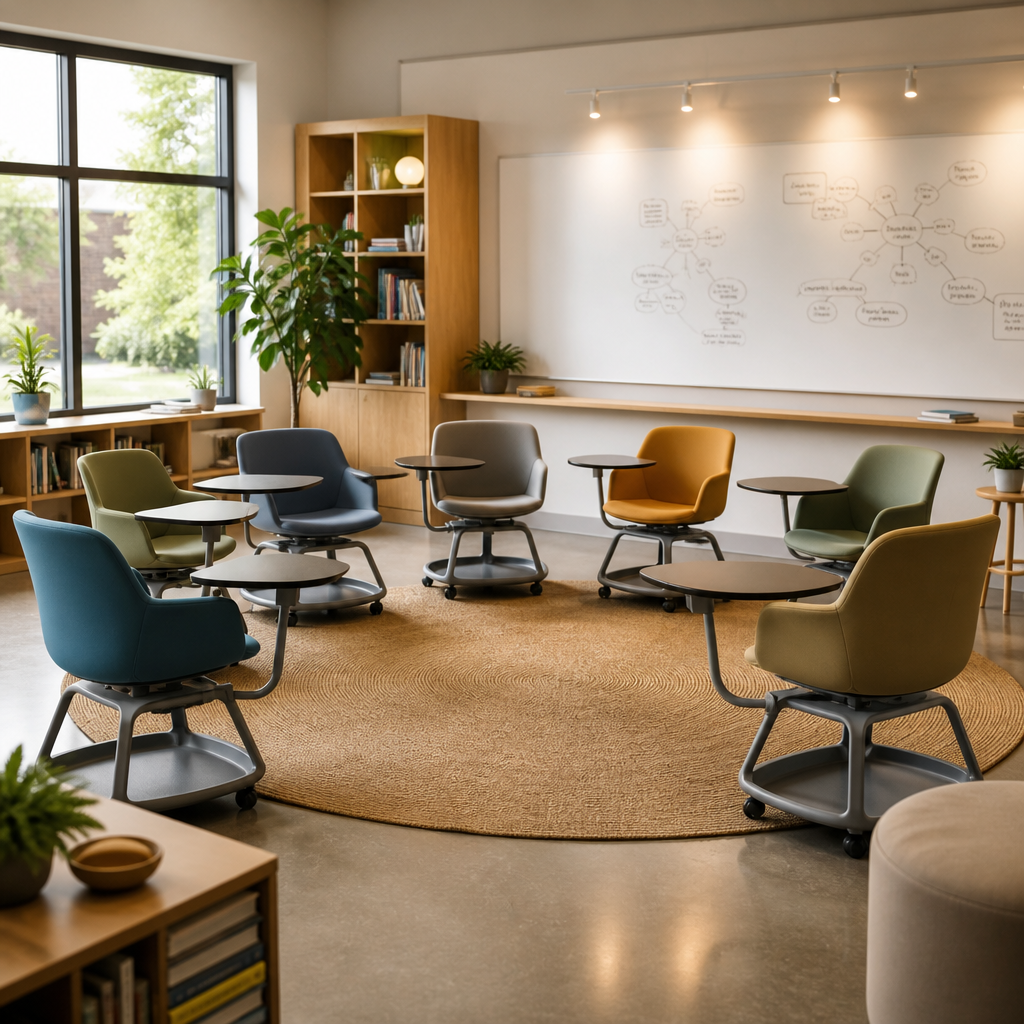
The physical and psychological architecture of the classroom plays a crucial role in determining whether a student feels safe to inquire. If the teaching methodology is purely lecture-based, where the educator is the sole arbiter of knowledge and students are passive recipients, the dynamic is inherently hierarchical. This setup often reinforces the idea that there is one ‘right’ way to understand a topic, making any deviation or expression of confusion feel risky.
Conversely, classrooms that prioritize inquiry-based learning and collaborative problem-solving naturally reduce the stigma associated with questioning. When teachers normalize the process of ‘thinking out loud’ and frame mistakes as necessary steps in the learning process, the social cost of asking a question decreases significantly. The goal is to move from a culture of ‘getting the right answer’ to a culture of ‘asking the right questions.’ This shift in perspective can fundamentally transform how students engage with the material and with each other.
The Impact of Teacher Feedback
The way a teacher responds to an initial, potentially ‘simple’ or off-topic question sets the tone for the rest of the term. A dismissive remark, an impatient tone, or a hurried correction can cause a student to shut down for months. On the other hand, encouraging, patient, and validating responses create a positive feedback loop. When a teacher praises the *process* of asking a question, rather than just the quality of the answer, they reinforce the value of inquiry and build the student’s confidence.
Addressing the Silence: Practical Strategies for Educators
If we want to dismantle the barriers that keep students silent, we need a multifaceted approach that addresses both the individual student and the broader classroom dynamic. Here are some effective strategies to encourage more participation:
- Implement ‘Think-Pair-Share’ activities: This allows students to process their thoughts with a peer before needing to address the larger group. It lowers the risk significantly.
- Use ‘Parking Lot’ boards: Allow students to write down questions on sticky notes and post them anonymously. This removes the social anxiety of being the one to raise a hand.
- Model vulnerability: When a teacher admits when they don’t know an answer and demonstrates the steps to research it, they show students that curiosity is more important than possessing static knowledge.
- Establish a ‘No-Question-Is-Too-Small’ policy: Actively reward participation and frame questions as a way to help the whole class move forward, rather than a disruption.
- Provide digital feedback loops: Some students are more comfortable asking questions through an online learning platform or a digital messaging tool, which provides a private channel for those who are shy about speaking in front of peers.
The Role of Parents in Supporting Inquisitive Minds
The foundation of curiosity is built at home. Parents can play a significant role in helping their children overcome the fear of asking questions. It starts with modeling an inquisitive life at home. When parents talk openly about things they don’t know or show genuine curiosity about the world, children learn that not knowing something is a natural and exciting starting point for learning.
It is also important to shift the focus from grading to learning. If the home environment is hyper-focused on test scores and rankings, the child will inevitably fear that any question revealing a gap in knowledge is a threat to their success. By asking questions like ‘What did you find interesting today?’ rather than ‘What grade did you get?’, parents can shift the focus toward the intellectual journey.
The Long-Term Impact of Silence
When students learn to suppress their curiosity and fear asking for help, the consequences extend far beyond a single school year. This habit can carry over into higher education and the workplace. The ability to ask insightful questions—to challenge assumptions, to seek clarification, and to advocate for one’s own understanding—is a critical professional and life skill. By ignoring the problem of ‘classroom silence,’ we risk producing a generation that is comfortable with ambiguity and afraid of the vulnerability required for true innovation and deeper understanding.
Conclusion
The reasons behind why students feel embarrassed or fearful of asking questions are multifaceted, tied to deep-seated social anxieties, classroom power dynamics, and self-perception. However, these are not insurmountable obstacles. Through a combination of intentional classroom design, empathetic teaching, and a supportive home environment, we can help students realize that the most powerful tool they have in their academic arsenal is the simple act of asking, ‘Why?’ or ‘How?’. When we create an atmosphere where questions are celebrated rather than judged, we unlock the true potential of our students and prepare them for a lifetime of empowered learning and growth.
0 Comments