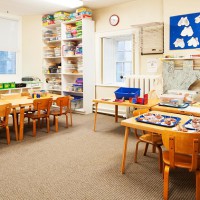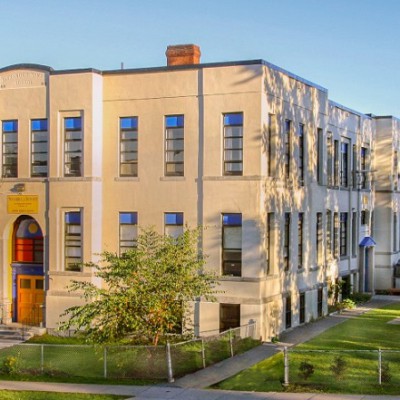
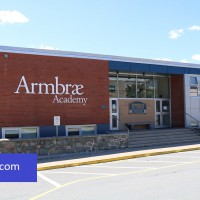

Founded in 1887 and led by Head of School Stephen Clarke, Armbrae Academy is an independent coeducational day and family boarding school in Halifax. Originally incorporated as Halifax Ladies College in association with the Presbyterian Church of Canada before becoming Armbrae Academy in 1980, the institution offers a comprehensive Preschool to Grade 12 education designed to foster intellectual curiosity, critical thinking, and lifelong learning. Guided by a university-preparatory curriculum incorporating enriched Nova Scotia provincial curriculum outcomes, character education, advisory programmes, project-based or experiential learning, and a Be Kind | Work Hard philosophy, students are prepared for university success and active citizenship. Small class sizes encourage individualized attention, nurturing each learner's ability to engage with concepts while building confidence and resilience.
The school’s academic program is structured across PreSchool and PrePrimary for ages 3 to 5, Lower School for Grades Primary to 5, Middle School for Grades 6 to 8, and Upper School for Grades 9 to 12. Additional offerings include Advanced Placement (AP) courses, a Career Education Program, an English as an Additional Language (EAL) Program, the Duke of Edinburgh Award Program, and athletics and co-curricular activities. Armbrae Academy operates under a mission to ensure every child is known, heard, and valued, fostering academic excellence alongside character education, community service, athletics, and well-being. Support systems include the O'Connor Student Success Centre, inclusive education support, the Family Boarding Program for students in Grades 8 to 12, the R2 - Rugged & Resourced Program, and the Caring School Community Program. The institution holds membership in Canadian Accredited Independent Schools (CAIS), School Sport of Nova Scotia (SSNS), and the Maritime Independent League (MIL), alongside provincial accreditation from the Nova Scotia Department of Education and Early Childhood Development.
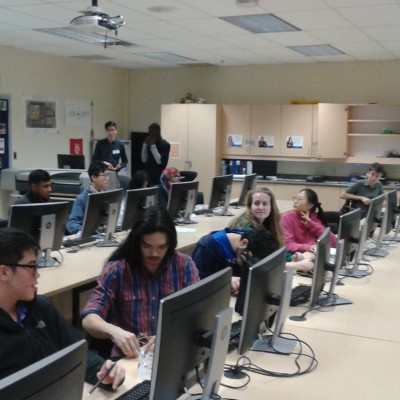
Technology integration is incorporated into the learning environment through classrooms equipped with Apple iMacs, interactive whiteboards, AppleTVs, and integrated projectors. Google Apps for Education, a dedicated learning management system, and Schoology provide students and parents with continuous access to resources, assignments, and collaborative tools.
🏫 Campus Life & Facilities
The campus provides spaces designed to support student engagement. The Art Classroom is equipped with professional-grade easels, printmaking tools, and a pottery kiln, while the adjacent Mezzanine Art Gallery and workspace provides area for larger-scale projects. Music and performance arts feature prominently through the Music Pavilion, a soundproofed venue with an instrument collection, alongside performance spaces such as the Abby Bryant Stage for theatre and music productions.
Drama and music programs provide opportunities for students across grade levels to develop public speaking, teamwork, and artistic confidence.
📚 Diverse Arts & Extra-Curricular Opportunities
The arts curriculum promotes critical and creative thinking alongside effective communication. Drama, music, and visual arts programs build technical competencies while encouraging students to engage in problem-solving. The arts programming cultivates confidence, emotional intelligence, and collaborative skills that complement academic success.
☀️ Summer Academy: Enrichment & Advancement
The Summer Academy offers credit courses tailored to varied ambitions, allowing current students and newcomers to advance academic credentials or explore new learning interests during the break. The program combines instruction with an environment focused on continuous intellectual growth and skill development.
🌟 Admissions & Tuition Overview
Applications for admission are submitted online with a non-refundable application fee of $150. Requirements include academic report cards from the last two school years, a confidential school report or teacher reference, proof of English language proficiency if applicable, and comprehensive documentation for applicants with diagnosed learning disabilities. Applicants participate in an entrance assessment and interview, which may include readiness assessments for younger grades, academic testing for Grades 1 through 12, and guidance consultations for Grades 10 through 12. An offer of admission is secured upon payment of a non-refundable $2,500 tuition deposit. Tuition fees for the 2026-2027 academic year are $17,342 for PreSchool and PrePrimary, $23,090 for Lower School for Grades Primary to 5, $24,961 for Middle and Upper School for Grades 6 to 12, and $34,650 for international students, with a one-time non-refundable entrance fee of $4,000 for new students alongside uniform costs ranging from $450 to $600 and incidental costs.
✨ Summary: An Inspiring Educational Community in Halifax
Rooted in tradition, Armbrae Academy is a community dedicated to developing well-rounded individuals. With a focus on academic rigor, creative arts, and technological fluency, the institution cultivates learners who are inquisitive, compassionate, and prepared to contribute to society.
Small classes, dedicated faculty, and supportive facilities create an environment where students grow intellectually, artistically, and personally. Through diverse programs, specialized support centers, and structured curricula, students are supported in reaching their potential.
Developing strong writing skills is an essential component of a comprehensive academic program, enabling students to articulate complex ideas clearly and persuasively across all subject areas. Progress in writing typically involves a combination of regular practice, constructive feedback, and exposure to diverse literary and informational texts. By engaging in frequent drafting and revision exercises, learners refine their vocabulary, grammar, and structural organization. Integrating writing instruction with project-based learning and critical inquiry allows students to synthesize information from multiple sources and construct well-reasoned arguments. Ultimately, cultivating proficiency in written communication supports academic achievement and prepares individuals for effective expression in university studies and professional environments.
Thoughtful integration of technology in modern educational settings serves to enhance student learning by providing dynamic tools for research, collaboration, and project-based inquiry. When digital resources are thoughtfully aligned with a rigorous curriculum, students gain opportunities to explore complex concepts through interactive simulations, multimedia presentations, and cloud-based teamwork platforms. Access to varied technological instruments also encourages digital literacy and prepares learners to navigate an increasingly interconnected world with confidence. Furthermore, learning management systems help streamline communication among students, teachers, and families, ensuring that assignment tracking, feedback resources, and academic support materials remain readily accessible both inside and outside the traditional classroom.