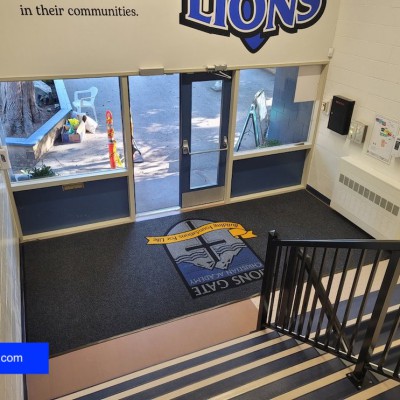
Established in 2012, Alcuin College is an independent K-12 school in Vancouver operating under the leadership of Head of School Stella Ablett. Guided by the mission to provide each student with a rich, rigorous, and personalized education in an intimate setting that fosters creativity and achievement, the institution is accredited by the BC Ministry of Education and Child Care. Small class sizes and a personalized approach form the foundation of this secular school, which is structured as a fellowship of scholars where both teachers and students wear school uniforms. The educational approach features inquiry-based learning grounded in the liberal arts, open-concept classrooms where grades mix within a vertical campus design, and real-world learning through community business partnerships. Tailored instruction ensures that every student is known individually, cultivating analytical and creative skills from early childhood through grade 12.
📚 Comprehensive Academic Programs
The curriculum spans two divisions: a Junior School program from Kindergarten to Grade 6 and a Senior School program from Grade 7 to Grade 12. Core subjects including Mathematics, Science, Literature, and Social Studies provide a strong academic foundation, complemented by early reading and Advanced Placement (AP) courses. Alcuin College was recognized on the 2023 AP Honor Roll. Language offerings include French, Spanish, and Latin, while students work toward fulfilling requirements for the BC Dogwood Diploma program.
🎭 Vibrant Fine Arts and Creative Opportunities
Creative arts are a hallmark of the institution's offerings, with diverse programs designed to engage students in music, dance, theatre, drama, and visual arts. These artistic disciplines are integrated into the educational experience to inspire expression and personal growth. Students benefit from an environment that values creativity alongside academics, cultivating well-rounded individuals with confidence in both their intellectual and artistic pursuits.
⚽ Active and Inclusive Physical Education
Promoting an active lifestyle, the school offers a wide range of sports and recreational activities suitable for all skill levels, including the Alcuin Thunder soccer club and general athletics. From basketball and volleyball to badminton and football, students are encouraged to participate in both social and competitive settings. Inclusive by design, the physical education program emphasizes teamwork, health, and well-being, providing ample opportunities to stay engaged and develop lifelong fitness habits within a supportive community.
🤝 A Collaborative Community Focus
Strong partnerships between educators, students, and parents create a collaborative community atmosphere. This environment ensures that each child's evolving needs are consistently understood and supported. Teachers and staff embrace the philosophy of shared learning, where knowledge flows in multiple directions, enriching both teaching and student experiences.
📝 Admissions and Financial Information
Admissions operate on a rolling basis with an application process that includes a visit, submitting an application form with a fee, a student interview and academic assessment, and a meeting with the Head of School. Kindergarten applicants must be at least 5 years old by December 31 of the entry year. Standard tuition is $26,000 for the 2026-2027 school year, with sibling discounts available ($24,500 for the second child, $23,000 for the third child), while international student tuition is $30,500. Additional fees include a non-refundable application fee of $375, a new student fee ($3,000 for Kindergarten-Grade 10, $6,000 for Grades 11-12), and a refundable Alcuin College Enrolment Debenture (ACED) of $15,000 per family. Need-based bursaries are also available.
Beyond the curriculum itself, the physical and social surroundings in which students spend their days play a significant role in their overall educational journey. Research indicates that thoughtfully designed spaces, ranging from open-concept layouts that encourage cross-age collaboration to intimate classrooms that facilitate close student-teacher interactions, directly influence concentration, engagement, and emotional well-being. When a learning environment balances academic rigor with spaces dedicated to creative arts, physical activity, and community gathering, children and adolescents often feel more secure to take intellectual risks and explore new ideas. Furthermore, a cohesive setting where community values align with daily routines helps reduce anxiety and fosters a sense of belonging, allowing learners to direct their energy toward inquiry, critical thinking, and personal growth.
Improving academic performance often involves building consistent study habits and fostering a strong partnership between home and school. Establishing a predictable daily routine for homework, encouraging regular reading, and helping children break larger assignments into manageable tasks can significantly reduce academic stress and enhance comprehension. Open communication between parents and educators allows for early identification of learning gaps, ensuring that students receive targeted support before challenges compound. Additionally, encouraging curiosity outside the formal curriculum, such as exploring scientific concepts through daily observations or engaging in creative problem-solving, helps reinforce classroom learning. When students learn to view mistakes as a natural part of the educational process rather than setbacks, they develop greater resilience and confidence in their ability to master complex subjects over time.