Bishop Hamilton Montessori School is a not-for-profit independent school dedicated to fostering holistic growth through a Christian Montessori education. Guided by the mission to support the academic, spiritual, physical, and social development of each child, the school serves students from infancy through early adolescence. Named after the first Anglican Bishop of Ottawa, the Right Reverend Charles Hamilton, the school operates under the motto, "Where mind and spirit go hand in hand." Its educational approach utilizes the Authentic Montessori Approach and the Catechesis of the Good Shepherd, emphasizing mixed-age classes, self-paced learning, and individual assessment.
🏫 Campus Life and Community
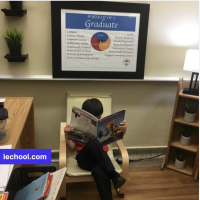
Located in Ottawa, the school provides an environment designed to support independent learning. As one of only three Montessori Canada (CCMA) accredited schools in the Ottawa area, it maintains a commitment to established Montessori principles. The school participates in the Canada Wide Early Learning Child Care (CWELCC) System for its Infant, Toddler, and Casa programs. Under the leadership of Director and CEO Renette Sasouni, the school has built upon a legacy of education established in 1983.
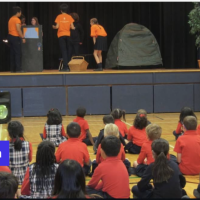
The school offers a range of additional services to support families, including a lunch program and various camps. Students may also participate in after-school programs that cover subjects such as chess, art, drama, sports, yoga, engineering, science, and French enrichment.
📚 Academic Excellence and Curriculum
The curriculum is structured to meet rigorous standards while fostering intellectual curiosity. The programs offered include Infant and Toddler (3 months – 3 years), Casa (3 – 6 years), Elementary (6 – 12 years), and Junior High (13 – 14 years). The school also maintains a French language program that spans from the Casa level through to Junior High.
💰 Admissions and Financial Information
Admissions are open to current students, siblings of current students, and new applicants, with enrolment processed throughout the school year as space permits. The application process includes a completed enrolment contract, a parent/school partnership agreement, an intake interview, and the submission of required documentation. A non-refundable $1,200 deposit is required to secure a position. Families utilizing the City of Ottawa’s Centralized Childcare Waitlist are contacted in order of priority.
Tuition fees for the 2026-2027 academic year are structured by program: $4,620 for Infant, Toddler, and Casa programs; $18,190 for Elementary; and $19,495 for Junior High. Families may incur additional costs, including enrolment, activity, capital, and music fees, as well as optional lunch program fees. Financial assistance is available to eligible families through a bursary program.
Integrating technology into the educational landscape offers meaningful opportunities to enhance student engagement and personalize the learning process. Digital tools allow students to explore complex concepts through interactive simulations, gain proficiency in research methods, and collaborate on projects that bridge geographical gaps. In a modern classroom, technology often serves as a supplementary resource that supports information gathering and the creative expression of ideas. By providing access to diverse digital archives and specialized software, educational environments can help students develop the essential digital literacy skills required to navigate an increasingly interconnected world. When utilized with intention, these resources function as an extension of traditional materials, allowing for a more flexible approach to inquiry-based learning and supporting students as they work at their own pace to master new academic challenges.
Early education programs play a foundational role in shaping a child's cognitive, social, and emotional trajectory for years to come. During the formative years from infancy through the primary grades, structured learning environments help build essential neural pathways that facilitate future academic acquisition and problem-solving abilities. Programs that emphasize self-directed inquiry and hands-on manipulation of materials encourage children to develop intrinsic motivation, concentration, and resilience when faced with new concepts. Furthermore, early exposure to collaborative settings fosters vital social skills, such as empathy, communication, and conflict resolution, which remain beneficial throughout formal schooling and beyond. By establishing strong habits of mind and a positive association with discovery early on, children are better equipped to transition smoothly into complex academic subjects and navigate lifelong learning with confidence.